
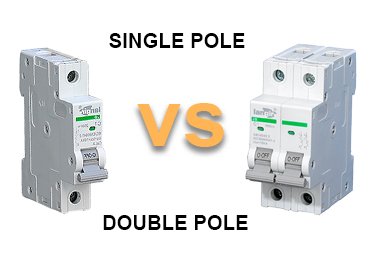
Find out what circuit breakers are, how they work, and the main differences between single and double-pole models. We’ll also discuss their uses, wiring options, where to use them, code requirements, and installation tips. By the end, you will know exactly what kind of breaker you should use for your electrical requirements safely and efficiently.
What Is a Circuit Breaker?
A circuit breaker is an automatic electrical switch that interrupts an electrical circuit when it detects a problem condition to protect your wiring and equipment from damage due to overload or short circuit.
How Circuit Breakers Work
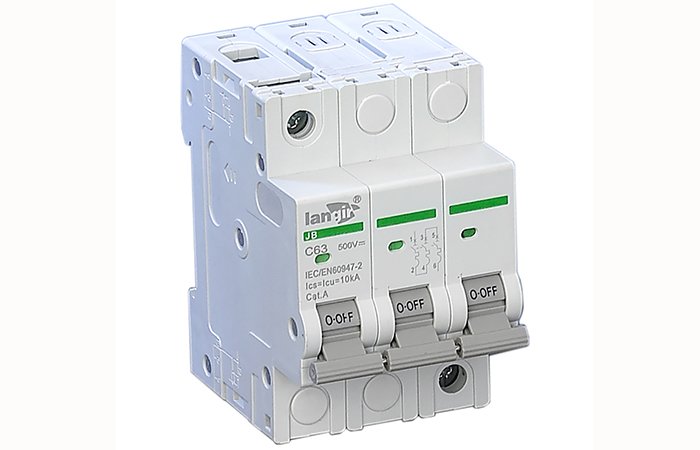
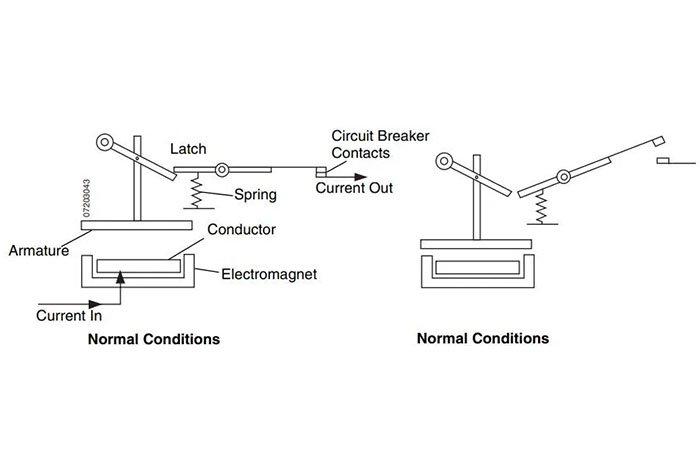
The circuit breaker has a switch operated by an electromagnet or a bimetallic strip. When the current becomes too strong because of an overload or short circuit, the heat or magnetic force will cause the internal mechanism to switch off, breaking the circuit in milliseconds and stopping the flow of electricity. This ensures that equipment is not damaged and fires are not caused. After the problem is resolved, the breaker can be reset by switching it back on, unlike a fuse, which needs to be replaced.
Single-Pole Circuit Breakers vs Double-Pole Circuit Breakers
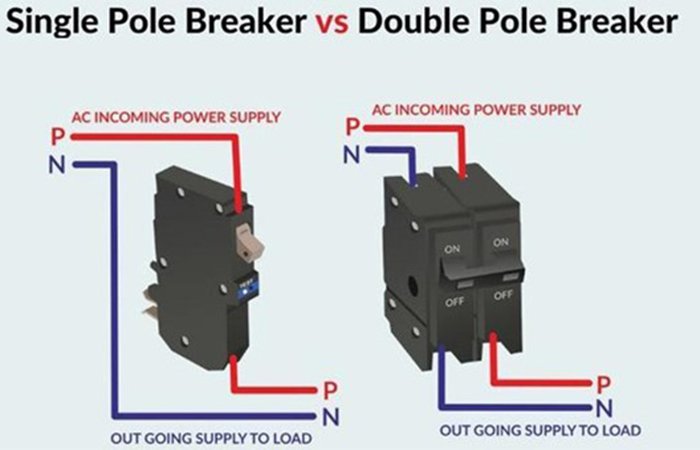
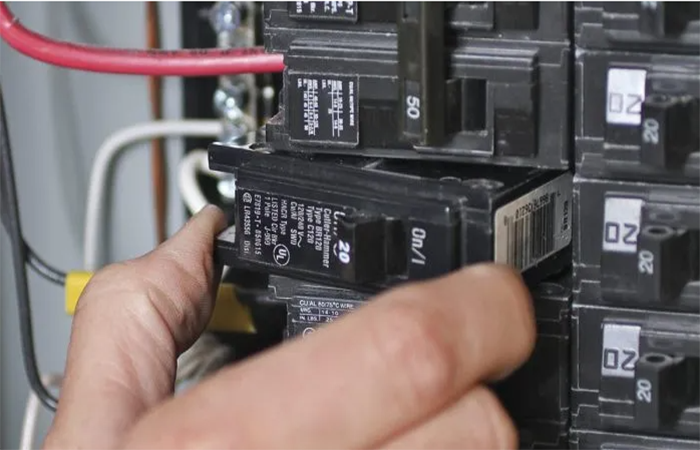
In most cases, your decision has to be based on voltage demand, current, and load type. A single-pole breaker clips onto one hot wire and supplies 120V to one hot wire. Double-pole breakers clamp onto two hot wires and are sized for a 240-volt load.
120-volt circuits require a single-pole breaker. A single-pole breaker is used with 120-volt circuits. It connects to one hot bus bar in the service panel. It delivers 120 volts, and the hot wire goes on the narrow blade. When adding circuits to a service panel, you use single-pole breakers for light-duty circuits and double-pole breakers for appliances.
Voltage
Single Pole
A single-pole breaker provides 120 volts. It’s wired using one hot wire, and the neutral bus acts as the return. This is a standard connection for North American homes.
Double Pole
A double-pole breaker feeds 240 volts by connecting two hot wires representing opposite phases. These hot legs are 180 degrees apart, breaking the 240V circuit to the breaker pair and allowing the breaker to supply 240 volts by connecting to both legs (while handling load and balancing the current).
Amperage
Single Pole
Most single-pole breakers are either 15 or 20 amps, while some 30A ones can be found in certain residential areas. They are generally applied to circuits with less current.
Double Pole
Double pole breakers come in larger amperage sizes, such as 20A, 30A, 40A, 50A, 60A, and more. They are ideal for higher current loads in residential or industrial applications.
Wiring Configuration
Single Pole
In a single-pole circuit breaker, there is one hot wire and one neutral wire that are connected to the breaker. It plugs into one slot of the breaker panel and is designed to control a single 120-volt circuit, typically for lights and regular appliances.
Double Pole
Double pole breakers connect two hot wires, consistent with black and red or black and white for single pole breakers, and a neutral wire for 120V appliances. For safety, a ground wire is inserted. Both hot wires are connected so that they trip if one has a fault.
Trip Mechanism
Single Pole
SPD breakers use a separate tripping mechanism. If an overcurrent or fault occurs, the corresponding breaker trips without the influence of the others.
Double Pole
Breakers are ganged and connected mechanically. If one leg senses a fault, both sides trip simultaneously, killing the entire 240V circuit for safety.
Neutral Required
Single Pole
A single-pole breaker must have a neutral in a single-pole breaker to complete the 120V circuit.
Double Pole
Neutrals are position sensitive and may be omitted if not required (in double pole applications, only if a load is being connected). For a 240V only load, no neutral is required. But you need a neutral wire for 120/240V combination appliances.
Applications
Single Pole
For general-purpose residential applications, use single-pole breakers on a light-duty residential circuit for lighting, wall outlets, and small appliances. They’re also compatible with dishwashers and garbage disposals rated 20 amps or less.
Double Pole
Double-pole circuit breakers are necessary for large appliances that connect to 240 volts, such as electric ranges, central air conditioning systems and electric water heaters. They are also used to supply power to subpanels.
When to Use Single-Pole vs. Double-Pole
If your use is 120V and the load is less than 20A, use a single pole for a general-purpose outlet or a light, and if you don’t need a split-phase supply. If you have a 240V device or want to wire 240V, if you have a high current-rated device, if that load needs both hot legs (L1 and L2), or if you’re feeding a sub-panel, you would use a double-pole breaker.
It can be dangerous if misapplied. You can’t wire a 240V device to a single-pole breaker. This is unsafe. It violates NEC article 240.15(B), necessitating all ungrounded conductors in a multi-wire branch circuit to disconnect simultaneously.
Installation Considerations
Breaker Panel Capacity
Ensure your panel has two empty consecutive slots before installing a double pole breaker. Space can be tight, and a subpanel may be necessary.
Wire Gauge
Match your wire size to your breaker size. Refer to NEC ampacity charts:
| Breaker Amps | Copper Wire (AWG) |
| 15A | 14 AWG |
| 20A | 12 AWG |
| 30A | 10 AWG |
| 40A | 8 AWG |
| 50A | 6 AWG |
It can cause the wire to become hot and catch fire in case of undersizing.
Load Balancing
Loads would be the best split on both hot legs. Imbalanced loads may impact the performance of the panel, most particularly in split-phase systems.
Code and Safety Requirements
NEC Guidelines
You must comply with NEC 240.4 to protect all the conductors from overcurrents, thereby preventing overheating and possible fire hazards. NEC 210.4(B) also requires you to disconnect all ungrounded conductors simultaneously with any multiwire branch circuit. Furthermore, NEC 110.3(B) states that you must install equipment as the manufacturer prescribes to remain code-compliant and safe.
GFCI and AFCI Compatibility
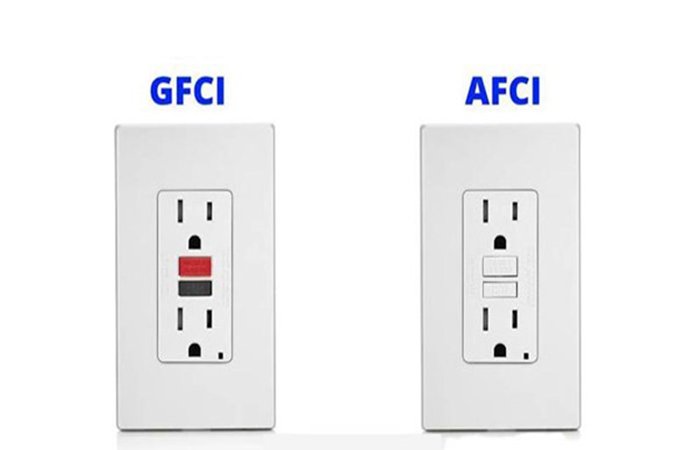
If you want protection against these hazards, install GFCI and (or) AFCI versions of single-pole and double-pole breakers. Use them in kitchens, bathrooms, laundry rooms, and bedrooms.
Labeling
Keep your breaker panel well-labeled at all times. Misidentification is dangerous when servicing equipment.
FAQs
1. What is a 50-amp single-pole breaker for?
It is generally used in special applications that need 120V at a very high current, such as some industrial equipment.
2. Can you divide a 220 breaker by 110?
No, you cannot split a 220V (240V) breaker to have 110V circuits from several places in the circuit where there are hot (black and red or white and black) wires. Every hot leg in a 240V breaker is 120 volts to neutral, so the breaker is configured to supply one 240V load, not two separate 120V circuits.
3. Can you use a single-pole breaker for 240V?
No, a single-pole breaker will only supply 120V. To provide 240V, you must use a double-pole breaker that taps each hot leg out of your panel.
4. Is it possible to obtain a 240V single-phase output from a single-phase input?
Yes, although not quite, since a typical residential single-phase gives 240V by adding up two 120V hot legs, which are just 180° out of phase. You have 240V between the two hots.
 Russia
 English