
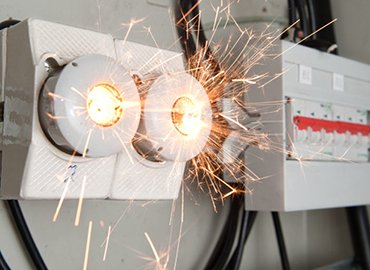
You reset the breaker, but it trips again right away. This isn’t just an inconvenience. It’s a clear sign that something in your electrical system isn’t working as it should. Each time it trips, it’s responding to a potential fault.
A breaker’s job is to protect your circuit from damage. It cuts off power when the current flow exceeds safe limits. This can happen due to overload, a short circuit, or faulty wiring. Ignoring repeated trips can lead to severe electrical hazards.
Therefore, you must sort out the real issue behind the tripping. The cause could lie in your connected devices and internal wiring. To fix it, you need to follow a clear diagnostic approach. That way, you can eliminate further risk and restore stable function.
What Is a Circuit Breaker?
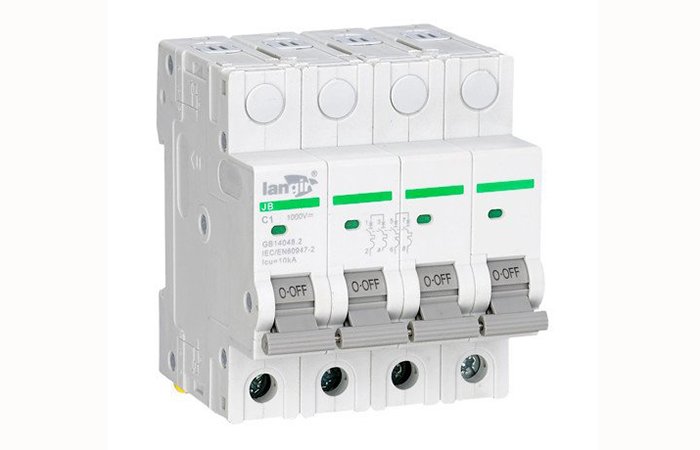
You rely on a circuit breaker to stop dangerous current flow. It acts as a safety device. It opens the electrical path when faults occur. When something goes wrong, it breaks the connection and protects your system instantly.
Unlike a fuse, a breaker doesn’t need replacing after a fault. You can reset it and restore power once the issue is cleared. This feature makes circuit breakers optimal for residential and industrial environments.
Inside the breaker, you’ll find either thermal or magnetic trip mechanisms. Thermal trips respond to overloads caused by continuous high current. While magnetic trips react to sudden spikes, like those caused by a short circuit. Each part plays a role in detecting faults and cutting off the circuit before damage occurs.
Common Reasons a Circuit Breaker Trips
Unless you get the cause, you cannot fix the problem. A tripped breaker will always indicate electrical stress. Determining the cause will allow you to forestall future issues and damage to the system.
Your circuit can be overloaded and disturbed by several faults. These problems include wiring errors and the failure of appliances. The five most common causes that lead to a trip are given below.
Overloaded Circuits
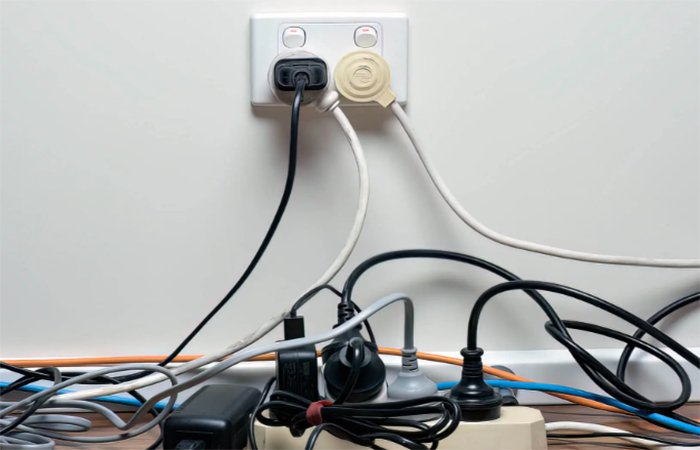
You are plugging an amperage load that is greater than the circuit is rated to carry. Such overloads increase the wire temperature, and the breaker trips. You’ll often see this in busy outlets or power strips.
The demand becomes high when more devices connect to a single line. In case you have a 16-amp breaker rating, and the load reaches 20, it trips. You must lighten the load or take devices off onto another circuit.
Older wiring often struggles with modern high-power appliances. When you continue to add new loads, you will be making several trips. The total current has to be equal to the breaker capacity.
Short Circuits
The worst kind of fault is a short circuit. It happens when a live wire contacts a neutral or another live wire. This results in an unexpected rush of current that is extremely above the permissible amounts.
There may be a pop, sparks, or a burning smell. At that moment, your breaker swings into action and switches off the energy. It prevents the wires from burning or getting hot.
A serious check is required to find a short. Inspect outlets, switch terminals, or frayed insulation. The direct high-current path may be generated by any exposed wire.
Ground Faults
Ground fault occurs when the current leaks to the ground. It does not flow in the neutral wire but takes a short path. You often see this in wet locations like bathrooms or outdoor setups.
However, this failure is not the same as a short circuit. In this case, the current enters the metal items or the grounded surfaces. It is hazardous since it may pass through you if you are in contact.
You need a GFCI breaker to detect these faults quickly. It feels the discrepancy and discontinues power in milliseconds. This avoids shocks, burns, or life-ending injuries.
Arc Faults
In loose contacts, high-energy sparks across loose contacts. It happens due to broken wires, frayed cords, or corroded terminals. It will not always be seen or heard, but it is a dangerous cause of fire.
You can find flickering lights or burning odors. It makes the wire hot, even at low current. This may, with time, cause the formation of surrounding insulation or wood.
This peculiar pattern is detected by Arc Fault Circuit Interrupters (AFCIs). They stumble before becoming hot. When your breaker is tripping regularly and no overloading occurs, then it may be an arc.
Overheating Appliance
Faulty appliances might make fuses blow. In case of internal wiring failure or if the motor takes too much current, it overheats. This draw is sensed by the breaker, and the circuit is opened.
You can only notice the breaker tripping when that device is operating. Test the reaction by trying to plug it into a different circuit. On the contrary, in case it continues tripping, it is the faulty appliance.
You are supposed to disconnect the device and examine whether it is damaged. Space heaters, microwaves, or compressors are common culprits. The only sustainable remedy is to replace or fix them.
Signs That Indicate a Tripping Circuit Breaker
You can spot warning signs before a full shutdown. The awareness of these symptoms helps you to act on time. It can also minimize the probability of damaging or failing the system.
Frequent Power Loss in Certain Areas
There may be frequent flickers of lights as well as device resets. Such interruptions tend to interrupt either one room or an outlet zone. It reflects on the tripping of the breaker at the normal load.
This indicates either excess or damaged wiring. In case the problem is repetitive, the circuit cannot meet the demand. You have to lighten the load or open a fault.
Buzzing or Burning Smell
When the panel is making a buzzing sound, it indicates internal arcing. Otherwise, unrestricted, this can incinerate the terminals. You might also smell melting insulation or plastic.
They are alarming indications of overheating and poor connections. Switch off the power and check the wiring. Safety depends on a professional check.
Physical Signs on the Breaker Panel
You could observe brown marks or hot breaker surfaces. The switch would be loosely fitted or rigid, or it would not reset. These are indications of either mechanical or thermal failure.
Sometimes, the panel cover feels warm to the touch. That is an indication of bad contact or internal heating. A breaker that exhibits such symptoms must be replaced right away.
How to Troubleshoot a Tripping Circuit Breaker?
You must adhere to a logical method of finding the fault. The issue can not be solved by random resets in the long term. An orderly check ensures that damage prevention and restoration are stable.
Step-by-Step Diagnostic Process
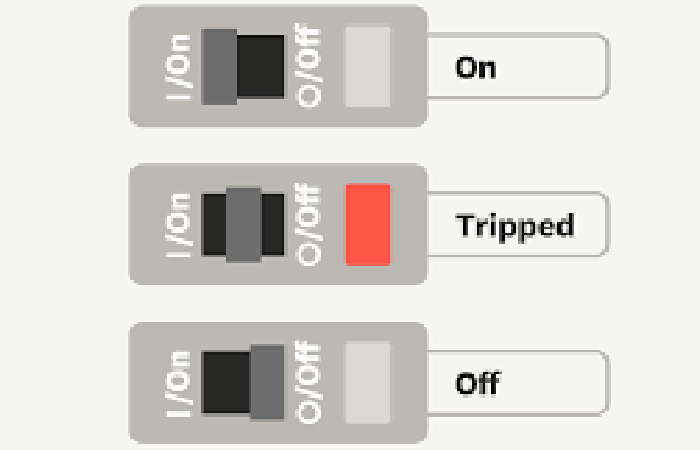
Shut off the power first to the devices on the afflicted circuit. Turn the breaker off and back on and see what happens. In case it switches off once again, the culprit is the wiring.
In case it remains on, unplug the devices one by one. Be mindful of the one hot cause of the trip. There could be an internal short or overload in that device.
Examine visibly all outlets and switches. Discolouring or ill-fitting shows signs of secrecy. In this case, any harm will have direct consequences of repeated trips.
Tools You May Need
Use a multimeter to check voltage and continuity. It assists you in identifying the presence of shorted wires and failed terminals. Overheating points may be detected by the use of an infrared thermometer.
The outlet check is assisted by a circuit tester. It may display inverted wiring or grounding. Insulated screwdrivers and wire strippers should be kept safely.
When you suspect the presence of arc faults, apply an AFCI tester. It is used to test breaker response by simulating arc patterns. Wear insulated gloves when doing live checks.
When to Reset and When Not To
After eliminating the load, you can reset a breaker. In case the cause was trivial, it will remain there. When on the next trip, it breaks, take it off.
Never reset burning-smelling or hot breakers. That indicates internal destruction or defective wiring. Forcing resets may create an injury or exacerbate the fault.
Check the entire circuit path, then reset. In case of uncertainty, a licensed technician should be consulted in the first place. Restorations of power always take a second to ensure safety.
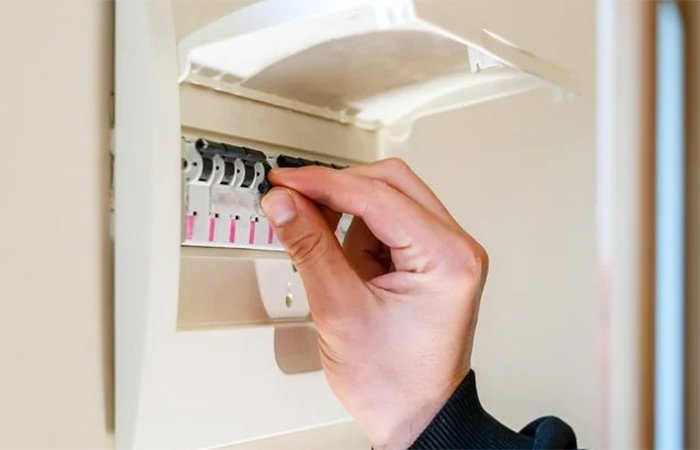
Preventive Tips to Avoid Future Trips
Proper planning will help you mitigate the number of breaker trips. Precautionary measures save your system and make it last longer. These are practices to keep power stable.
Tip 01: Avoid Overloading Circuits
Divide high-power loads in two or more outlets. Avoid running space heaters, microwaves, and air conditioners simultaneously. A load is created by each device, which strains the circuit.
Make sure you know the amperage rating of your breaker before connecting your tools. When your devices are more than that, then add another circuit. This minimizes heat accumulation and spontaneous trip-outs.
Label the circuits and follow them to the loads connected. Distinctive labelling prevents any unintentional overuse. It also accelerates troubleshooting later.
Tip 02: Regular Maintenance Checks
Inspect the breaker panels to see the heat or rust, or loose wires. Tiny faults increase when they are not indicated. This is done through monthly checks to prevent downfalls.
Make sure not to leave any terminal screw loose, and clear up the dust deposits. Dust may cause arc faults over time. Check the insulation to see cracks or melt marks.
Hire a technician for yearly inspection cycles. They can test panel safety and trip thresholds. Major costs of repair are avoided.
Tip 03: Invest in Surge Protectors
Apply surge protectors to the computers, routers, and TVs. A sudden increase in voltage overloads breakers and destroys equipment. An excess is soaked by a protector.
Put up a panel-mounted surge unit in the case of an industrial location. It protects the total system against outside surges. This is essential in lightning-prone areas.
Surge protection also decreases the trip rate with time. It serves as a protective covering for random faults. Your equipment and circuit are safeguarded by you.
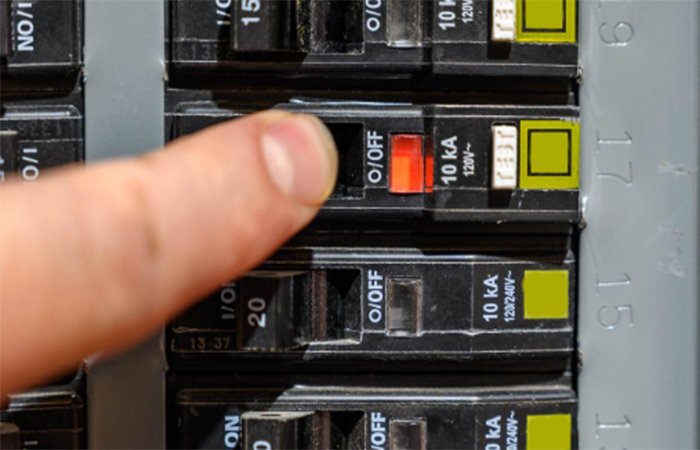
Final Verdict
You’ve now seen why a circuit breaker keeps tripping. Each trip points to a real electrical issue, whether it’s an overload, a short, or a faulty device. The knowledge of these causes helps you respond safely and prevent damage.
By learning to spot early warning signs, you can reduce major risks. With the right diagnostic steps and regular maintenance, you can keep your system running safely and efficiently. Always follow best practices, and when in doubt, consult a qualified professional.
A circuit breaker is not just a switch; it’s a safety mechanism. Respect its role, monitor your load, and take action early. That’s how you maintain a stable, reliable electrical setup in the long run.
FAQ
Q1. Can I use a higher-rated breaker to stop trips?
No, you should never install a higher-rated breaker. Because it can bypass safety limits and risk overheating your wires. So, always match the breaker to the wire gauge and load.
Q2. How often should I check my breaker panel?
You should inspect it every 3 to 6 months. Always look for signs of rust, heat, and loose connections. Regular checks help avoid future trips and reduce system downtime.
Q3. Is a tripping breaker always a serious problem?
Yes, it usually signals an underlying electrical issue. It may be an overload, short, or a failing appliance. Ignoring it can lead to equipment damage and may cause failure.
Q4. Can one faulty device cause constant trips?
Yes, even one damaged plug or wire can lead to trips. A faulty motor, exposed cable, or internal short can overload the circuit instantly. Thus, remove and test each device individually.
 Russia
 English