
Introduction
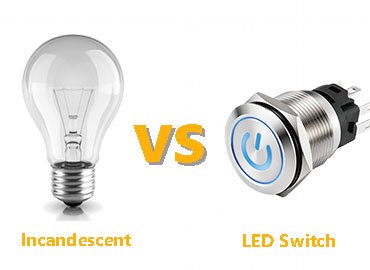
In the past few decades, incandescent bulbs were the only source of lighting systems. But technology has changed a lot. Modern homes rely on LED switches and deploy them in the residential and commercial sectors.
The question is: What is the difference between an incandescent light switch and an LED switch? This guide will explain and compare each switch to know the ultimate differences.
What is an incandescent? How does it work?
Incandescent is a traditional circuit that has a small filament bulb. The flow of current heats the bulb and illuminates it.
The working mechanism depends on the tungsten filament. A temperature of 2,000 to 3,300 Kelvin heats up sufficiently to produce the light.
Common uses are:
- Household light switches with old models
- Industrial machinery indicators
- Power strips and appliances
Pros and cons of the incandescent
There are a few benefits and drawbacks to incandescent.
Pros
- Low upfront costs. Incandescents light bulbs are basic and available at extremely low prices compared to competitors.
- Simple circuitry. They don’t require expert knowledge or different regulators and resistors to install. So, installation is pretty effortless.
- No polarity issues. Whether AC or DC, there is no issue of polarity as the mechanism depends on heat, not the polarity of the current.
Cons
- Energy inefficient. Incandescents consume more energy than LED switches. They increase electricity charges.
- Short lifespan. They don’t last longer than 1000-2000 hours because of their high heat output. It damages components and decreases lifespan.
What is an LED switch? How does it work?
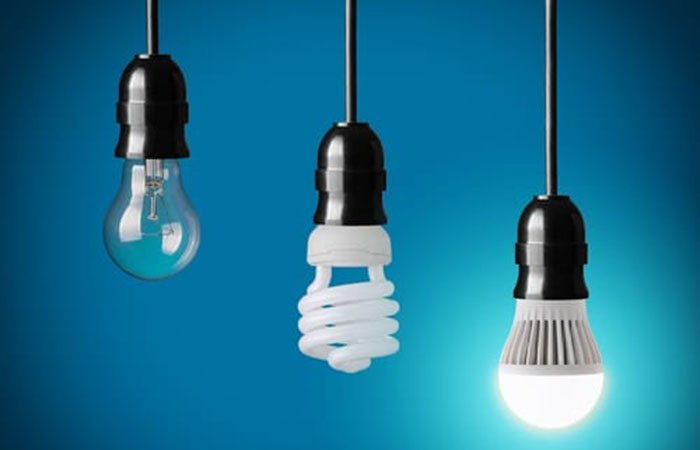
LEDs are light-emitting diodes that release photons upon the interaction of electrons and produce light. They rely on the electroluminescence phenomenon to operate and cause brightness.
In simple words, electrons flow through the semiconductor surface and interact with one another. During this interaction, energy is released in the form of photons!!
These switches have diverse applications in:
- Modern residential and commercial light switches
- Automotive and marine dashboards
- Industrial control panels and smart switches
- Backlit buttons in consumer electronics
Pros and cons of the LED switch
LED switches have a few positive and negative points highlighted here.
Pros
- A variety of colors. If you want multiple color indicators, LED switches provide access to them.
- Long life. They don’t emit heat and prevent overheating. There are fewer risks of damage to other components and a long life of 25,000-50,000 hours.
- Energy efficient. LED switches have a compact structure and consume less energy. It saves you electricity and provides cost benefits for an extended duration.
Cons
- Polarity sensitive. Installation of the LED switch requires careful attention because of polarity. Usually operates in DC, but rectifiers can help you operate at AC voltage.
- Higher initial costs. You must bring the regulators, rectifiers, and resistors for different purposes. All these components elevate the costs of LED switches.
Differences between the incandescent and the LED switch
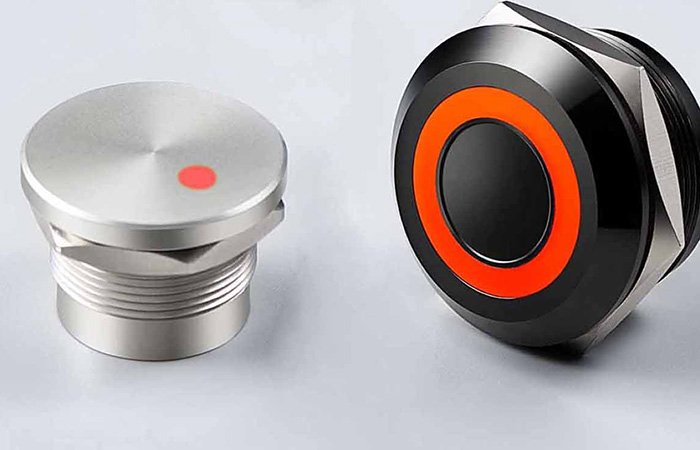
There are several differences between the incandescent and LED switches based on technology, efficiency, and costs.
| Feature | Incandescent | LED Switch |
| Illumination Technology | Tungsten filament heating | Electroluminescence with photon release |
| Energy Efficiency | Low | Very high up to 90%+ |
| Lifespan | Short (1,000–2,000 hours) | Long (25,000–50,000 hours) |
| Heat Output | High heat production | Low heat output |
| Cost | Low upfront cost | Higher upfront, reudced long-term cost |
| Circuit Complexity | Simple wiring, AC/DC compatible | May require resistor/driver and polarity |
Illumination Technology
Incandescents use a traditional illumination technology with a small filament bulb. The current passes through the tungsten wire, and it gets heated and illuminated.
LED switches are far better at this point. They rely on the electron flow across a semiconductor junction that illuminates the scene.
Energy Efficiency
Incandescent bulbs generate heat, leading to energy losses. Therefore, they are less efficient because of energy losses.
Compared to it, LED bulbs consume little current but provide better brightness. Moreover, they don’t produce much heat, leading to energy savings and efficiency.
Lifespan
The lifespan of an incandescent is short because of the high energy consumption and degradation. It usually lasts 1,000 to 2,000 hours.
In contrast, LED switches feature up to 25x better lifespan and longevity. For example, they can provide non-stop energy for 25,000 to 50,000 hours.
Heat Output
The light production phenomenon in the incandescent is heat production. Therefore, they get heated within seconds and continue producing it until you turn them off. They offer a high heat, affecting nearby components.
LED switches feature an electron transmission mechanism, leading to less heat production and better safety of the nearby components.
Cost
If you compare the switches’ upfront price, incandescents are the winner. But if you look at the electricity cost and degradation, they are pretty inefficient in the long run.
LED switches have a higher upfront cost but offer better cost savings in the long term. For example, you save energy costs by decreasing electricity consumption. Moreover, it allows a longer lifespan, fewer maintenance hassles, and decreased replacement costs.
Circuit Complexity and polarity
Incandescents are plug-and-play. They don’t need special consideration for polarity. They work well with AC or DC power.
LED switches involve a challenging installation. It is because you have to check the AC and DC voltage. You might need the current limiting resistors to avoid the excessive usage of the LED. Rectifiers are necessary if you have changing power sources.
Frequently Asked Questions
1. Do incandescent lights work well in cold environments?
Incandescent switches hate cold weather and temperature. It is because they need more heat and voltage to start. Their heat dissipation is pretty high to combat the lower temperature conditions.
2. Can I replace an incandescent with an LED switch directly?
No. You can’t directly replace the incandescent with the LED because LED installation requires additional components like:
- Current-limiting resistor
- Compatibility with dimmers or low-load circuits
- Proper polarity (especially for DC circuits)
3. Why do LED switches require polarity consideration?
LEDs, or light-emitting diodes, follow an electron flow with the light production. It occurs in one direction. If you provide current in the opposite direction, they won’t work. Before installation, you should check the polarity of the power source.
4.Is there a risk of LED switch burnout from overvoltage?
Yes. LED switches don’t accept aggressive voltage fluctuations. They are sensitive and might experience premature failure and burnout due to overvoltage.
Conclusion
Incandescents are a conventional solution, while LED switches are the modern ones.
Incandescent lights are ideal when you need simple installation and low upfront cost for basic lighting. LED switches when you need energy efficiency, better illumination, and long-term performance.
 Russia
 English