
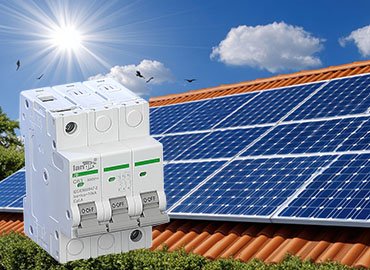
Solar energy has become a standalone source for many households and commercial systems. A comprehensive setup can make energy independence possible thanks to the off-grid support.
Like the typical energy sources, solar current and voltage can reach peaks. The current surges or sudden drops are still dangerous and can burn out your devices.
To protect your devices, there comes the solar circuit breaker system. Today, we will discuss various types of solar circuit breakers and understand how they can help.
What Is a Solar Circuit Breaker?
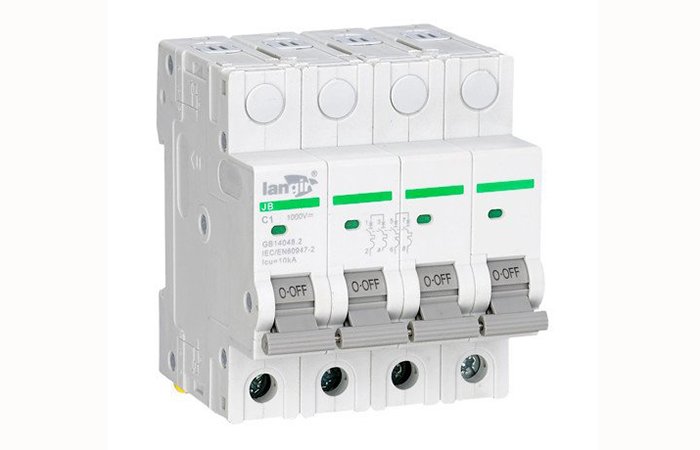
A solar circuit breaker is a device that protects the solar system. Usually, a solar system has two types of currents. DC comes directly from the solar panels, while an AC transformation occurs at the solar inverters.
Solar circuit breakers can handle both the AC and DC surges or short-circuits if they are hybrid.
How Does a Solar Power Circuit Breaker Work?
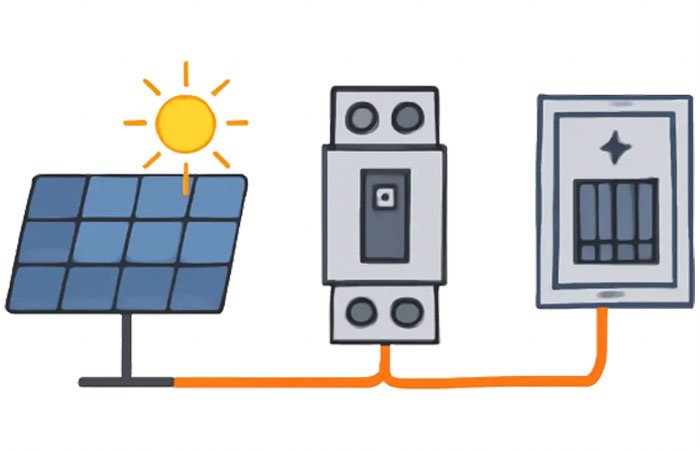
The working mechanism is straightforward. These circuit breakers interrupt the electrical supply whenever the current increases or decreases above or below the threshold. It leads to protected devices and better safety of the whole system.
Types of Solar Circuit Breakers
There are two prominent types of solar circuit breakers. Either they can handle the current type or share differences in the structure and function.
Let’s discuss them.
By Current Type
Here are two solar circuit breakers based on the AC and DC systems.
- DC Circuit Breakers
A DC circuit breaker handles the current flow between the batteries, controller, and solar panels. It is a more strategic circuit breaker because it is in the same direction as the DC and provides comprehensive safety.
- AC Circuit Breakers
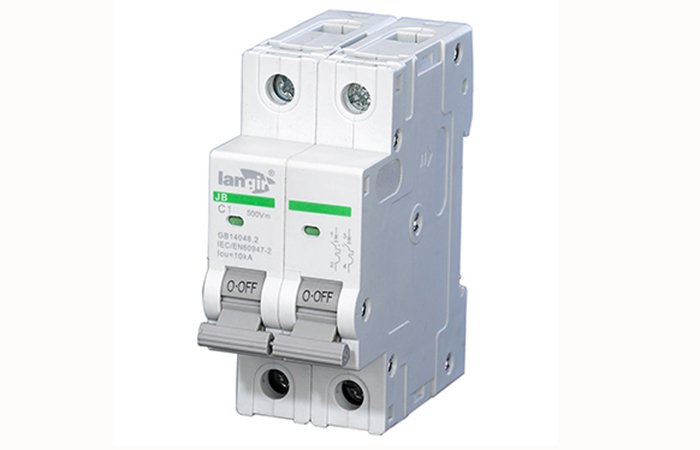
An AC circuit breaker is a standard system installed between solar inverters and household devices. They all involve the AC applications. So, this circuit breaker is best for such installation spaces.
By Structure & Function
Different structures and functionalities can introduce more critical types of solar circuit breakers. Here is the list.
- Miniature Circuit Breakers (MCBs)
MCB are compact circuit breakers with the basic functionality. They are good for low power requirements and interrupt the current flow in case of surges and short-circuits.
- Moulded Case Circuit Breakers (MCCBs)
If you have a medium to large solar setup, an MCCB can help you out. It can control higher currents and is good for large power systems. MCCBs come with excellent flexibility and enhanced protection.
- Ground Fault Circuit Interrupters (GFCIs)
Ground faults can cause the current to leak into the ground and are pretty dangerous for the systems. GFCIs offer current protection in such cases and deliver an excellent performance in the moisture conditions.
- Arc Fault Circuit Interrupters (AFCI)
Damages or loose wires are potentially dangerous for your system. They can create higher currents and cause the device to malfunction. Arc fault circuit interrupters are there to handle the spikes.
Benefits of Using Solar Circuit Breakers
Solar circuit breakers are the defense systems for the appliances. They offer various benefits discussed as:
Protection Against System Overloads
Circuit breakers for solar turn off the current supply when there is a surge in the system. It protects the devices from damage and keeps your system safe.
Increased Safety For Equipment And Users
The primary use of the circuit breaker is to keep home or commercial appliances safe. They interrupt the supply to the devices and keep them from burning out.
Easier System Isolation During Maintenance
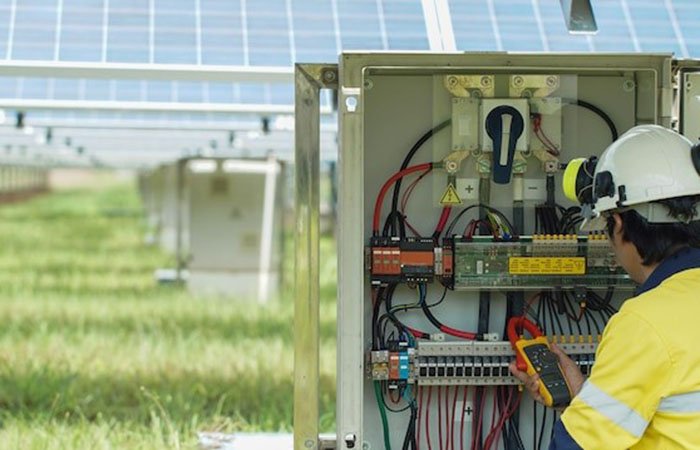
You can isolate and turn off the supply during maintenance with AC and DC breaker systems. It makes repair easier and keeps the system more efficient than before.
Improved System Reliability And Lifespan
Since your system responds faster to avoid damage, it keeps the system reliability at the top. You can extend the system’s lifespan and maintain high efficiency.
Key Specifications to Consider
If you are choosing a solar circuit breaker, there are a few things to consider. These are:
Voltage and Current Ratings
Voltage and current ratings must match. It is because undersizing can cause frequent tripping. Match the voltage your system has with the circuit breaker ratings.
Breaking Capacity
A breaking capacity is the built-in ability of a circuit to break the current flow. A circuit breaker should have a higher breaking capacity than the current it handles.
Polarity (unidirectional vs. bidirectional)
DC is a unidirectional current, while AC has a dual direction. Inverters convert the DC into AC and control the current transformation. You should decide on the circuit breaker polarity based on your installation position. For an AC, bag the AC circuit breaker.
Environmental Factors
Humidity and temperature can influence the circuit breaker. For example, humidity causes frequent tripping. Extreme weather conditions potentially change the tripping capacity. If installing solar circuit breakers in industrial sectors, you should bring the IP-rated circuit breakers with a proper enclosure.
Compliance with Standards
Your solar panel circuit breaker should comply with the international standards, such as IEC 60947, UL 489, or NEC 690. They guarantee the reliability and stability of the circuit breaker systems.

FAQs
1.Can I use a normal MCB in place of a solar circuit breaker?
No. You should never use a normal MCB instead of a solar circuit breaker. A normal MCB handles the AC currents, while a solar setup deals with the DC currents. It can cause arcing and risk safety.
2.What happens if a solar circuit breaker is undersized or oversized?
It causes incompatibility issues. For example, an undersized solar circuit breaker trips even with a small surge and causes problems. Meanwhile, an oversized might not trip even when the current threshold crosses. It leads to damage in both cases.
3.How can I test if my solar circuit breaker is working correctly?
It is straightforward to test a solar circuit breaker. You can turn on all your devices and manually trip the solid state circuit breaker. Confirm if it cuts the power supply, which technically it should. Use a multimeter to check the ratings.
4.Can a solar circuit breaker trip due to weather?
Yes. Extreme weather conditions can trip the circuit breaker. It happens due to higher temperature and moisture, causing corrosion and automated tripping. In such cases, you should bring IP-rated circuit breaker systems.
Conclusion
Solar circuit breaker is a versatile device with the necessary functionality in the circuit. Whenever buying, you should check the compatibility and quality. Also, consider the protection of the current type you want. Go for hybrid protection systems to handle AC and DC surges.
 Russia
 English