
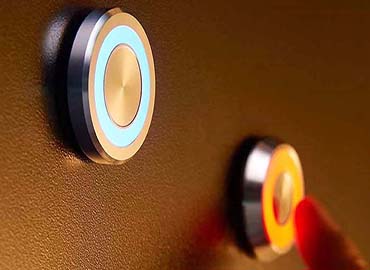
In modern electronics, traditional ways are bygone. The touch control system has become an integral component.
Smartphones to medical devices rely on the touch system. Among the various technologies available, capacitive switches stand out as the best choice because of sleek design, efficiency, and powerful control systems. These switches detect the change in the capacitance and respond to the touch.
Do you want to know how capacitive switches work? Today, we’ll shed light on the capacitive switches, working mechanisms, pros, and cons. Let’s have a real-time debate!
What is a Capacitive switch?
Capacitive switches are the revolution in the industry that detects the nearby changes in capacitance and translates them into digital signals.
Such switches are useful for conductive surfaces, such as the human fingers. They respond to the proximity of objects, too, for the system controls.
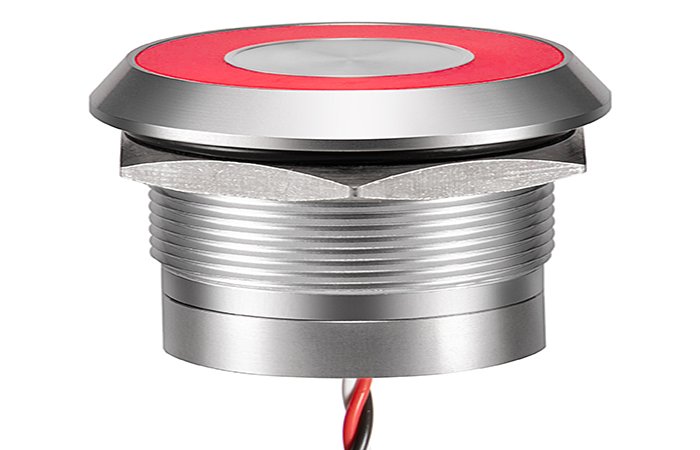
How Does It Work?
The working mechanism is straightforward:
- Conduction is the main factor.
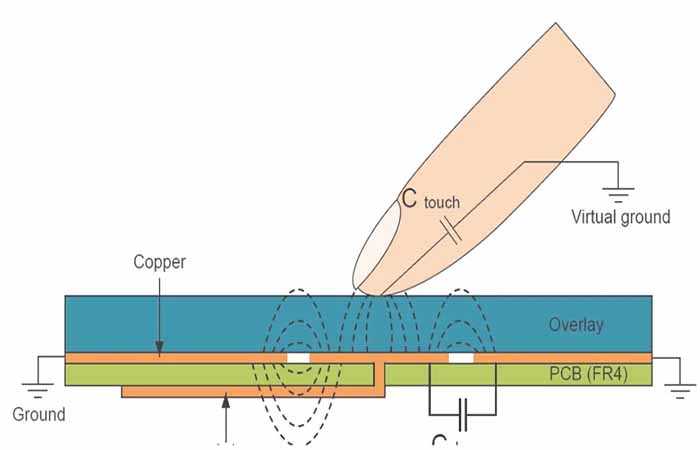
- If an object moves or touches such switches, a change in capacitance occurs.
- This capacitance is the game-changer and gives a digital signal per command.
Types of Capacitive Switches
There are a few types of capacitive switches available.
Self-capacitance vs. Mutual Capacitance
Self-capacitance switches get capacitance from a single electrode compared to the mutual capacitance that takes signals from multiple electrodes.
Touch-based vs. Proximity-based Switches
Touch-based switches respond only if you touch them with your finger. On the other hand, proximity sensors detect nearby objects and transmit them to the capacitive switches.
Surface vs. Embedded Capacitive Switches
Surface switches are on the surface and exposed to humans. For example, they are part of the display. Embedded switches are lying on the backend under the non-conductive surfaces.
Advantages
Are capacitive switches pretty famous around the globe? Why? Because of the following benefits.
Durability And Long Lifespan
There are no physical components— no risks or wear and tear! Your system offers exceptional durability as there is the least impact of the environmental factors. So, capacitive switches have a longer lifespan.
Aesthetic And Seamless Design
Capacitive switches have a flawless design. They come embedded with an outer layer of glass or plastic. The polished look of the screen makes the scene mesmerizing. Plus, they fit in every sleek design.
Water And Dust Resistance
Are you worried about the water and dust resistance? There is good news— an external shield of plastic or glass is waterproof. Even if the dust sticks to the surface, it impacts only the external layer, not the capacitive switches. Therefore, they have mind-blowing durability.
Low Maintenance And Silent Operation
Capacitive switches don’t have physical components, such as metal. So, there is no concept of sound production during their operations. Since they are under the shield of non-conductive surfaces, you have to wipe your glass, but not burn the midnight oil on the capacitive switch cleaning. Therefore, they require less to no maintenance.
Limitations
Capacitive switches come with some usual drawbacks related to inappropriate operations and pricing.
False Triggering
Capacitive switches capture the capacitance when a finger or an object comes around. It sometimes leads to false triggering and headaches for the consumers.
Limited Operation
Humidity is a significant problem as it can turn on or off the capacitive switches. Moreover, if you wear gloves, it doesn’t provide a reliable response.
Cost Considerations
One of the most crucial drawbacks is the high cost of the capacitive switches. They are modern, stylish, and sleek tools that are expensive compared to mechanical switches.
Applications
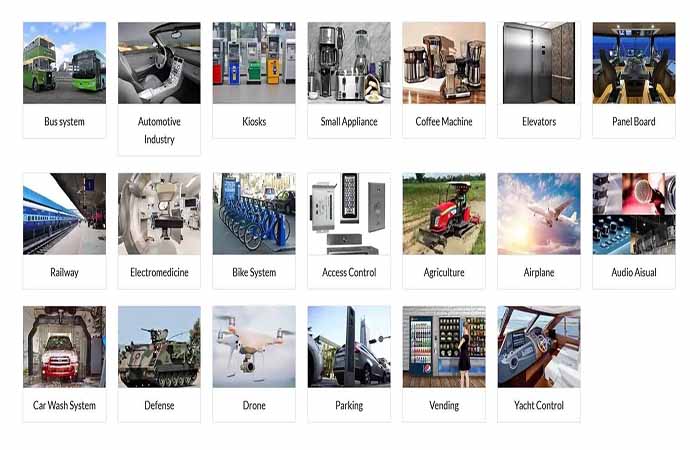
Capacitive switches are a matchless choice in some applications. Let’s hover over those necessary applications.
Consumer Electronics
Many electronic devices used daily, such as laptops, smartphones, and tablets, use capacitive switches for the touch control systems.
Automotive Interfaces
The automotive industry depends largely on capacitive switches. The modern Tesla vehicles offer a touch-based dashboard. BYD cars use advanced technology that requires capacitive switches as their integral component for operations.
Medical Devices And Industrial Equipment
Medical devices must have a foolproof hygiene method to keep the microorganisms and other contaminants miles away. Even industrial tools require sterilization. Capacitive switches make it a hassle-free and hygienic process with a simple touch and control system.
Smart Home Technology
Smart homes use capacitive switches running on the backend. They are useful in lights or deploy smart thermostat technology with a touch display system.
Installation And Maintenance
Installation Steps
There are a few installation steps.
- Step 1: Choose surface and sensor
Which surface do you prefer? Glass or plastic? Also, select the sensor type, for example, mutual capacitance or self-capacitance.
- Step 2: Clean the surface and mount the sensor
Clean your non-conductive surface and mount the sensor in the appropriate location.
- Step 3: Connect to PCB components
For sensor response, connection with the PCB components is 100% crucial. Go on with the PCB connection for proper grounding.
- Step 4: Adjust settings
Calibrate the sensitivity and adjust settings accordingly.
Maintenance Tips
Regular checkups and maintenance can avoid long-term hassles. Here are a few maintenance hacks.
- Routine cleaning. Make a habit and cleaning up the surface daily. The glass or plastic materials should undergo a thorough inspection and cleaning.
- Check debris and dust. Is there any dust stuck to the surface? Wash it off to clean the surface and make it look polished.
- Check sensitivity. Capacitive switches are all about sensors. If there are hypersensitivity responses, recalibrate sensors and reset them as needed.
FAQs
1.What is the difference between capacitive and mechanical switches?
Capacitive switches are the modern way to control the system with touch, electrical fields, and other systems. In mechanical switches, there is physical contact using springs and other metallic components.
2.Can capacitive switches work through glass?
Yes, 100%. Capacitive switches are good for working through glass and non-conductive surfaces. They detect the signals and bring the ultimate change.
3.How are capacitive switches integrated into a circuit or product?
Capacitive switches are part of circuits with their connection to microcontrollers and touch sensors. Whenever there is a change in capacitance, these switches give an instant signal.
4.Can capacitive switches detect proximity without touch?
Capacitive switches can sense nearby objects and transmit the signals without touch. It is a quick, efficient, and powerful system.
Conclusion
Capacitive switches are a futuristic technology featuring luxury in smart homes and industrial sectors. Their flawless integration in every system makes them an extraordinary alternative to mechanical switches.
 Russia
 English