
Our household has many devices that are constantly using electricity. For example, a phone charger is there. If you look at its adapter, you’ll find tons of descriptions.
Units like watts, volts, and ohms are standard on the chargers and other electrical appliances. Have you ever wondered what exactly they mean and how they are significant in this scenario?
Today, we will discuss the four most famous and functional units—amp, volt, watt, and ohm—and understand their relationship. Let’s learn.
What is Amp?
Amp signifies current and is a short form of ampere. It is the unit of current that flows through the circuit.
More amperes of current means more electricity is flowing or electrons are flowing between the electrode ends. It is crucial to choose when you are buying the devices and need compatibility with your power source systems.
What is Volt?
Current is produced by electron flow between the electrodes. There is a driving force that pushes the electrons to the far end. It is the voltage, measured in volts.
If there is a higher voltage, the push is pretty high. Lower voltage means less pushing force.
What is Watt?
Watt is the electrical power of a device. It means the energy or work done by the electricity.
A higher wattage means a higher energy consumption. For example, a 100-watt bulb consumes ten times more energy than a 10-watt bulb.
What is Ohm?
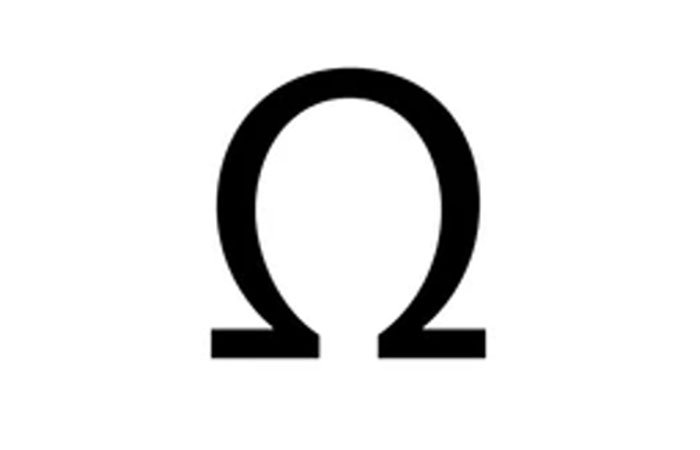
Ohm’s law opposes the current flow through the circuit. If the ohm is high, it means resistance to current flow is pretty high.
Ohm depicts the resistance to current. A circuit with an 8-ohm resistance will have a low current compared to a circuit with 4 4-ohm resistances.
Amp, Volt, Watt, and Ohm: How Are They Related?
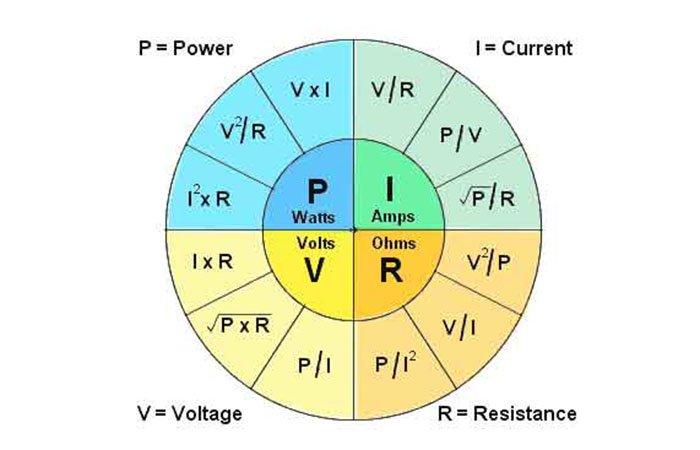
Amp, volt, watt, and ohm are related to each other by various methods and formulas. For example:
Ohm’s Law
As per Ohm’s law:
Voltage = Current x Resistance
Resistance is a constant in this formula, while the increase in voltage can cause increased current and vice versa. This law describes the relationship between the current and voltage through the formula and gives an idea of current flow in the circuit.
You can calculate the voltage and current both if you have the value of any one. For example:
A device has a resistance of 10 ohms while the voltage is 20V. The current will be:
20V = Current x 10 ohm
Current 20/10 = 2 Ampere.
Power Formula
The formula depicts the direct link and variations between power, voltage, and current.
Power = voltage x current
Power is directly related to the voltage or current if one factor stays the same. When the current and voltage are high, the device’s power is higher. It means devices consume more power than others.
Reciprocal Relationships
The interconnection between these circuits is given as:
- If ohms increase, amps decrease and vice versa.
- If volts increase while resistance remains constant, amps increase.
- If amps increase and voltage remains constant, power increases.
Real-World Applications
These circuit terms have real-world significance. Let’s take a look.
Household devices
Almost all household electrical and electronic devices have amp, volt, watt, and ohm ratings. For example:
- A refrigerator has a rating of 800 W. It draws current and presents resistance based on the voltage ratings.
- LED switches are low power devices ranging from 10W to 50W. However, they require less current.
- Electric kettles are high power and voltage devices.
Chargers and electronics
Chargers and electronic devices are mainly concerned with electrical currents and voltage. Here are a few examples to know:
- USB chargers output 5V, 9V, or 12V depending on fast-charging standards
- Smartphones have compatibility with different wattage chargers, such as 33-watt or 67-watt chargers.
Automotive systems
Cars and motorcycles also use the electrical systems. Especially electric bikes and vehicles come with quality batteries that have a particular voltage, power, and change in capacitance.
Audio equipment
Audio equipment focuses more on the ohms and watts. Impedance matching for speakers and amplifiers is necessary.

Common Mistakes
When understanding the values and units, you might confuse terms and units. Here is how they all act.
Confusing volts and watts
Volts and watts are not directly related. If you are buying a 20V battery compared to a 12V battery, it is not necessary that a 20V battery have more power than a 12V battery; also, current decisions on this aspect are unclear.
Overloading circuits
Overloading occurs when your current draw exceeds the circuit limits. It happens when you connect multiple high-power devices to a single circuit.
Wrong charger matching
Always choose compatibility; otherwise, the circuit might overload. For example, a 12V and 2A system must have the same rating across the power source and devices.
Safety Tips
Do you want to avoid any mishaps? Perfect. The solution lies in the safety steps. Here are a few:
Avoiding overcurrent
Overcurrent can burn out your circuits and melt your wires. Therefore, check the current rating and match it in all conditions. Have dedicated outlets to match the current requirements.
Using proper wiring
Thick wires handle currents better compared to thin wires. So, you should match the wire thickness and check the current ratings.
Surge protection
Voltage spikes damage your devices and circuits. Either use a higher rating system that handles the spikes or get surge protectors, such as voltage stabilizers or UPS.
FAQs
1. Why are volts considered electrical «pressure»?
Voltage acts as a push through the circuit. It works like pressure in the water pipes, pushing the current through the circuit.
2. How do amps affect the performance of electrical devices?
Amp decides on how much power a circuit or a device can draw. A high-ohm device can consume less power while offering full performance and is less likely to heat up.
3. What happens when a device receives too many amps?
A high amp means there is a fault in the circuit, as a device can consume only the required amp. If it draws more than its capacity, it can burn out the circuit and cause fire accidents.
4. How do I calculate watts from volts and amps?
You need to multiply the volts by amperes and calculate the watts. For example, a 5V voltage and 2A current can provide 10 watts of power.
Conclusion
Amp, volt, watt, and ohm are fundamental units that describe the behavior of the current and power in devices. Learning them is necessary as you’ll get a compatible solution that offers full performance without overloading or short-circuiting the system. It keeps your energy consumption optimized and makes your system energy efficient.
 Russia
 English