
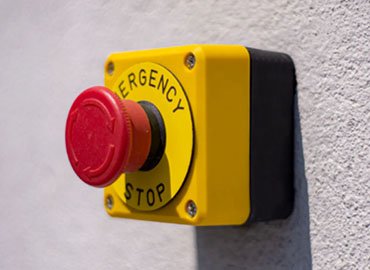
Machinery and other tools operate smoothly due to timely switching on and off. Certain malfunctions may arise from unforeseen events. In some cases, failures occur that necessitate the immediate shutdown of systems.
Emergency stop (E-stop) buttons are available to instantly manage the circuit and prevent further damage. Would you like to learn how to operate these emergency stop buttons? Let's discuss the various steps and common mistakes to avoid any issues.
What are Emergency Stop Buttons?
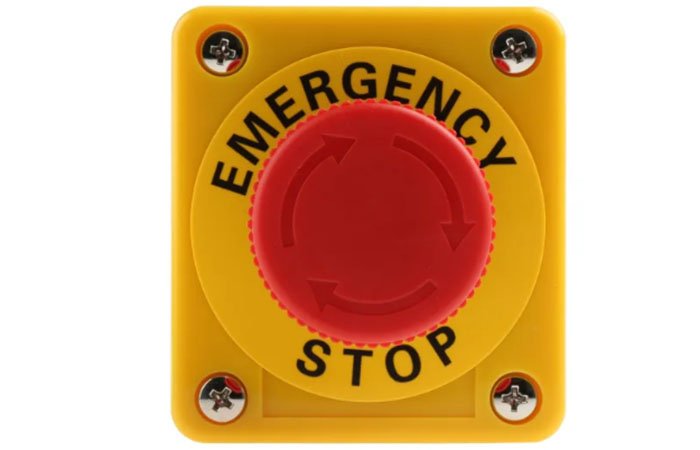
Emergency stop buttons,, or E-buttons, are safety switches that interrupt the electrical supply in circuits. They facilitate smooth circuit operation and enable management during emergencies.
Thanks to these switches, it is easy to prevent major accidents. The standard features of these switches include being:
- Large, round, and red in color,
- Mounted on equipment or control panels,
- Designed to lock in place once pressed,
- And released by twisting or pulling.
How Does an Emergency Stop Switch Work?
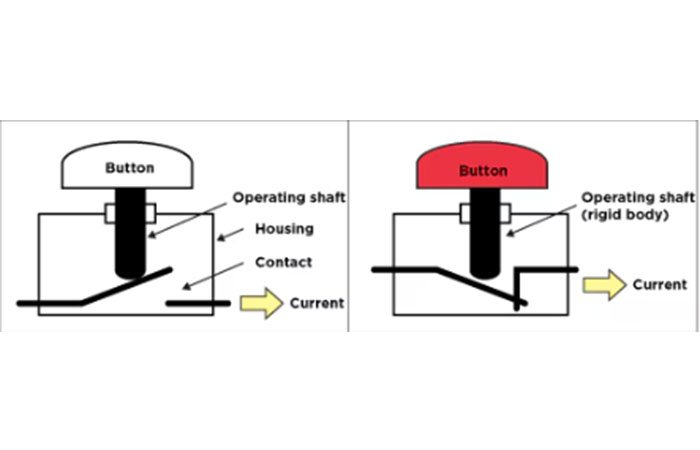
Emergency stop buttons are normally closed (NC) switches, meaning they are in a closed state by default, allowing current and power to flow through the system.
When a failure occurs, operators press the button to open the circuit, cutting off the current supply. In the event of an accident, the absence of current in the circuit prevents major errors or failures that could harm the system or operators.
Tools and Materials Needed
Various tools and materials are required for the operation. These include:
- An emergency stop button (with NC contacts).. It must be clearly labeled for timely use.
- Wires and connectors are used to secure the connection between terminals.
- A power supply or power source provides current flow to the circuit.
- A screwdriver and wire strippers are used to remove insulation and tighten nuts.
- Relays/contactors are essential for powering heavy machinery.
- A multimeter.
Step-By-Step Wiring Instructions
Are you ready to start your first DIY wiring guide? Let’s understand the whole wiring process in six steps.
Step 1: Disconnect the power
Turn off the power supply and disconnect the button from all sources. Use a multimeter to test voltage and current readings to determine if current is flowing. Also, gather all tools in one place to ensure efficiency.
Step 2: Identify NC terminals on the E-stop
There may be multiple terminals on the E-stop; however, you must locate the NC terminals. Common terminals include:
- NC,
- 21–22,
- 1–2,
- Or a symbol indicating a closed contact.
Do not use the NO terminals, as they are unsafe for emergency buttons and compromise safety. Therefore, identify the NC terminals on the button.
Step 3: Connect the power source to the NC input terminal
Are you using a relay? If yes, connect your control power supply to the NC input terminal.
In the case of a direct power source, you can connect it to the E-stop buttons. All power passes through the E-stop buttons before reaching the machinery.
Step 4: Connect the NC output to the machine’s control circuit
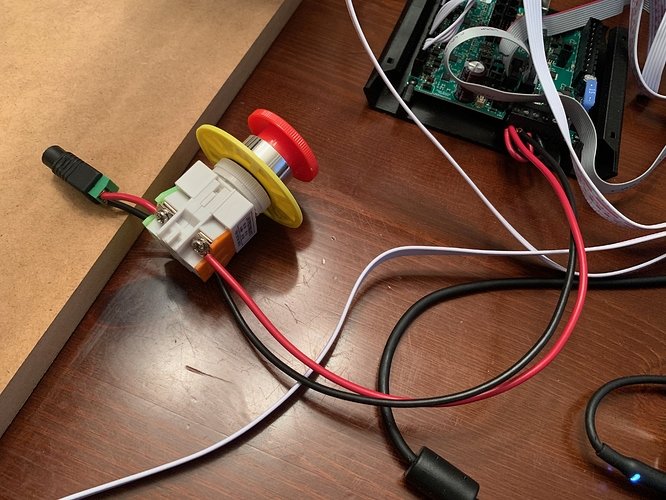
Since one end of the NC terminals is ready for connection, link this end to the machinery’s control circuit, such as the motor starter coil, relay coil, PLC safety input, or the contactor A1 terminal.
Now, the system will process power through the button. When the button is not pressed, it allows all power from the source to reach the machinery. If the button is pressed, the power supply is cut off, ensuring safety in accidental situations.
Step 5: Secure all wires and tighten screws
Loose connections can cause excessive heat buildup and may burn the wires. Additionally, carefully strip the wire insulation. Secure all cables and ensure the connections are safe.
Step 6: Restore power and test
Before finalizing, always test the system. For example, turn on the power and let the machine operate. Press the E-stop button and verify that the power supply is cut off.
Standard Wiring Mistakes to Avoid
Incorrect connections or an irregular power supply can cause accidents. Here are some tips to avoid common mistakes:.
Using NO terminals instead of NC
NO terminals mean the system is off by default and turns on when the button is pressed. Using NO terminals contradicts the fundamental purpose of E-stop buttons and may lead to dangerous situations.
Loose terminal screws
Loose connections can have several consequences. For example, pressing the button may not completely cut off the power supply. Additionally, overheating and intermittent shutdowns are possible. Therefore, tighten all screws effectively.
Skipping grounding
Grounding is a safety feature that directs excess current to the ground. Skipping grounding is highly dangerous.
Wrong voltage rating
E-stop switches are designed to handle a specific voltage range. Incorrect voltage ratings can cause compatibility issues. Ensure the voltage ratings of the E-stop switches match the requirements.
Not integrating with the main contactor or controller.
In industrial settings, high currents and voltages can damage devices. Therefore, never connect directly to E-stop buttons. Instead, link the E-stop to a relay and allow the power to be connected through the relay or contactor.
FAQs
1. Do I need an NC or NO Contact for an E-stop?
You should use an NC switch. In the default state, this switch is on, while pressing the button in an emergency cuts off the supply.
2. Can I wire multiple emergency stops together?
Yes. You can connect and use multiple emergency stop buttons in series. Pressing one button can turn off the whole series.
3. Should an E-stop cut power directly or via a relay?
You should use a relay system to provide and cut off the power. It offers a safer mode, especially for industrial tools.
4. Does the law require an emergency stop?
Yes. In most cases, ISO 13850, OSHA, and IEC regulations require machinery to have the necessary emergency stop buttons. It avoids mishaps and provides a better protection system.
Conclusion
Emergency stop buttons are safety buttons that act in case of emergencies and turn off the whole system. In industrial settings, they offer a more crucial job for secure connections and timely management of the power supply.
You should install the emergency stop button in all cases.
 Russia
 English