

Single-pole and double-pole configurations are widely utilized across numerous products. Both switches 以及 circuit breakers are available in single-pole and double-pole versions. This article will assist you in understanding the distinctions and functions of single-pole and double-pole configurations in switches and circuit breakers. We welcome you to read on.
What Is Single Pole and Double Pole?
In electrical engineering, single-pole and double-pole are commonly used electrical terms. Their manifestations are also diverse.
A single-pole switch, abbreviated as SP, indicates that it possesses only one set of electrical contacts, thus it can control only one circuit—one input and one output. Common types can be normally open either normally closed, momentary or maintained (self-latching), and therefore it is generally suitable for controlling simple electrical appliances or equipment.
A double-pole switch, abbreviated as DP, indicates that it has two sets of electrical contacts, which are connected to two independent circuits. It can control the two circuits separately and can also operate in momentary or maintained (self-latching) states. It is suitable for more complex and flexible circuit control and equipment.
Among miniature circuit breakers, single-pole and double-pole types are the most common. They not only protect the miniature circuit breaker itself but also safeguard the entire circuit against overvoltage, undervoltage, and fault currents. A single-pole miniature circuit breaker can control only one line (the live wire). A double-pole miniature circuit breaker essentially consists of two independent single-pole units combined, capable of interrupting two circuits simultaneously. It can control one live wire and one neutral wire concurrently, offering higher safety.
In summary, the definitions of single-pole and double-pole switches and circuit breakers are relatively straightforward. If you wish to learn more about single-pole and double-pole configurations, you may search for additional related articles to read.
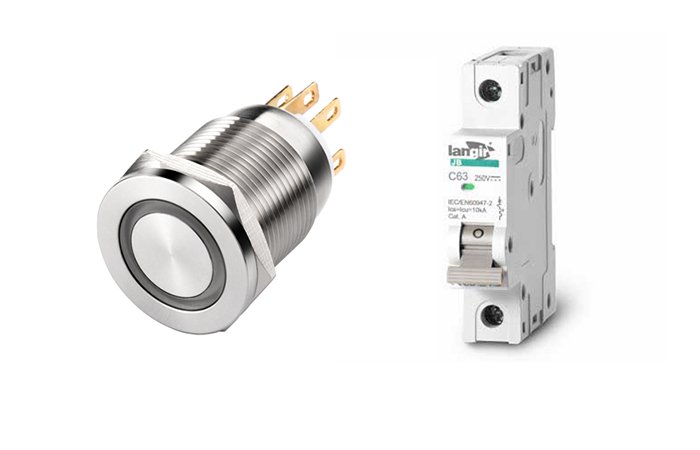
What’s the Difference between Single Pole and Double Pole?
Difference in Voltage
There are many different series of single-pole and double-pole switches, both categorized into direct current (DC) and alternating current (AC) types. However, the voltage ratings of miniature circuit breakers vary significantly, though the current rating can reach up to 63A.
The voltage rating for a single-pole AC miniature circuit breaker is 120VAC, while for a double-pole it is 220VAC.
The voltage rating for a 1P DC miniature circuit breaker is 250VDC, and for a 2P it is 500VDC.
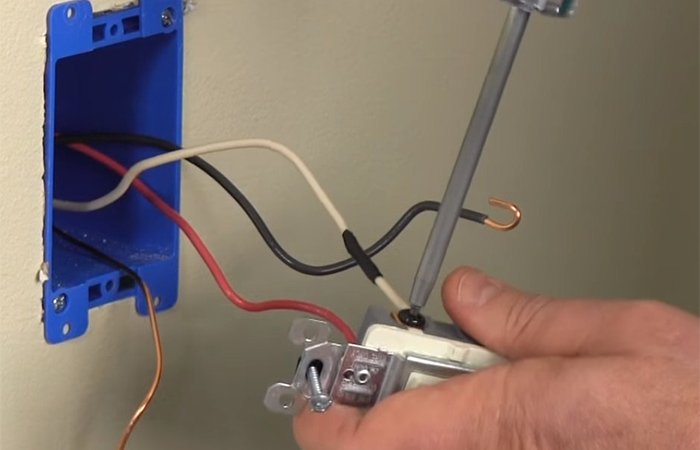
Difference in Wiring
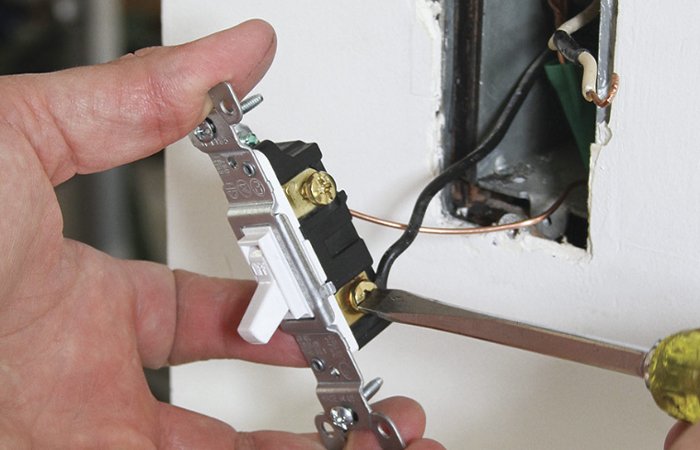
Single-pole switches are the simplest to wire. If current flows across both terminals, the switch will function normally.
Double-pole switches have more terminals, up to six or eight. The switch overload is connected to two terminals, and the common pin is connected to one terminal, enabling control of both sets of circuits. Then, connect the positive and negative poles of the LED according to the application requirements.
A single-pole miniature circuit breaker can be connected to only one wire, typically with the live wire on top and the neutral wire on the bottom.
The most common wiring convention for a double-pole miniature circuit breaker is "left live, right neutral," meaning the left side connects the live wire (top and bottom), and the right side connects the neutral wire.
Difference in Application
Due to the differing complexities of the circuits they control, single-pole and double-pole switches or circuit breakers have different applications.
Single-pole switches are among the most common electrical components in everyday life. They can be used for simple lighting control, socket current control, or simple appliance control, function selection, etc. Examples include escalator emergency stop buttons, alarm buttons, etc.
The more complex design of double-pole switches makes them suitable for more intricate environments, allowing independent control of one circuit path. For instance, complex lighting systems,, multi-purpose socket combinations, more complex electrical equipment and circuit controls, and pressure switches all utilize double-pole switches.
Single-pole circuit breakers are suitable for small electrical equipment where voltage requirements are typically not too high, such as main switches for small lighting systems in home electrical panels, DC battery packs,, solar power systems., 等。.
Double-pole circuit breakers have higher rated voltages and can be applied to mechanical equipment with large power loads, such as central air conditioning units.
In conclusion, aside from these differences, there may be other distinctions. You may try searching for more keywords to explore further.
FAQ
What is the price difference between single-pole and double-pole?
Because double-pole structures are more complex than single-pole structures, double-pole units are generally more expensive than single-pole ones.
How to determine if your switch is single-pole or double-pole?
You can identify them by examining the terminals. Single-pole switches have two terminals, while double-pole switches have six or eight terminals.
Are double-pole switches more difficult to install than single-pole switches?
Double-pole switches have more terminals than single-pole switches, so installation is somewhat more complicated but not overly difficult. However, whether installation is simple or complex, it must be performed by qualified professionals.
Is there a difference in size between single-pole and double-pole circuit breakers?
Yes, single-pole miniature circuit breakers typically have a module width of 12.5mm, while double-pole modules are twice as wide and have four terminals.
What are the advantages of single-pole and double-pole configurations?
Advantages include affordable price, ease of installation, wide application range, simple operation, and strong adaptability.
How to determine if a single-pole or double-pole device is faulty?
Typically measured using a voltage tester or multimeter.
 Russia
 English