

Electricity is an integral component of today’s world. Every electronic device runs on electricity; however, the mode of electrical supply can be different.
Electricity involves three crucial factors—voltage, current, and resistance. Today, we will discuss how voltage, current, and resistance work together and understand the transmission mechanisms.
What is Voltage?
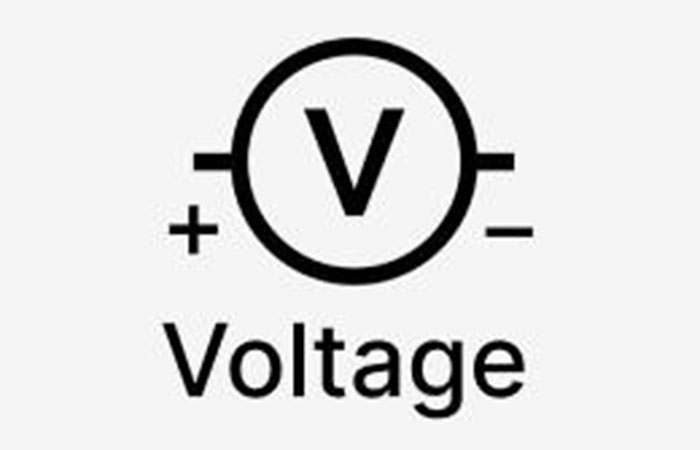
Voltage refers to the potential energy per unit charge in a circuit due to its position. It measures the difference in potential energy between two points and is often considered as energy per unit charge.
The unit of measurement is the volt, represented as “V.»
What is Current?
Current is the measure of electron flow from the positive to the negative terminal. It indicates the rate at which electrons flow through the circuit per unit time. Current is quantified in amperes (A).
There are two main types of current.
- AC or alternating current flows in alternating directions and changes direction every millisecond or less. It is ideal for home appliances and other tools.
- DC or direct current flows in the same direction and is commonly used for batteries. Solar panels produce DC current.
What is Resistance?
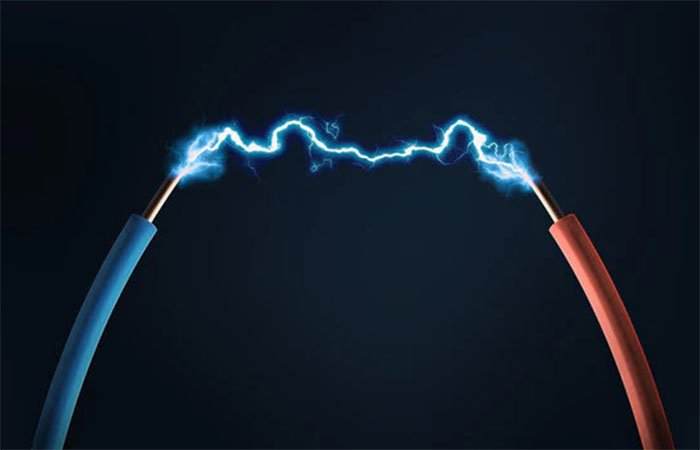
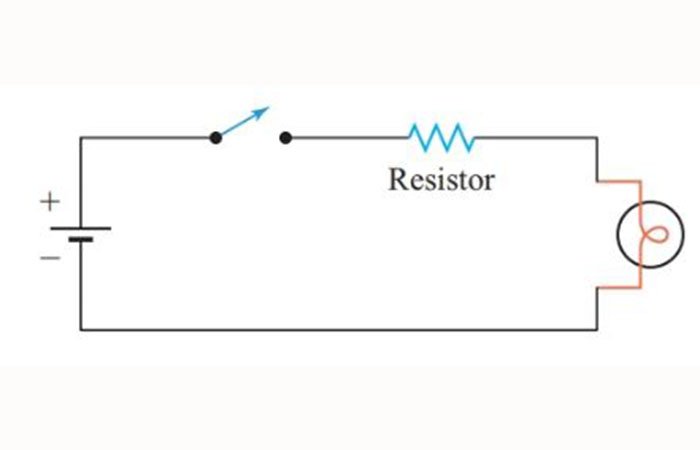
Resistance refers to the opposition to current flow. It indicates the degree to which current is impeded in a circuit.
The unit for measuring resistance is the ohm. The symbol is “Ω.”
Key Differences between Voltage, Current, and Resistance
There are significant differences among these three terms. But before we explore them, let's understand Ohm’s law. According to the law:
Voltage = Current x Resistance
As per the formula, voltage is directly proportional to current. This means that the higher the current, the higher the voltage, and vice versa.
Let's examine how voltage, current, and resistance differ from one another.
| Feature | Voltage | Current | Resistance |
| 符号式 | V | I | R |
| Measured by | Voltmeter (parallel) | Ammeter (series) | Ohmmeter (circuit off) |
| Role in Circuit | Driving force | Flow of charges | Opposes current |
| Affected by | Battery/source | Voltage & Resistance | Material, length, temperature |
| Series Circuit | Divides | Constant | Adds up |
| Parallel Circuit | Constant | Divides | Decreases overall |
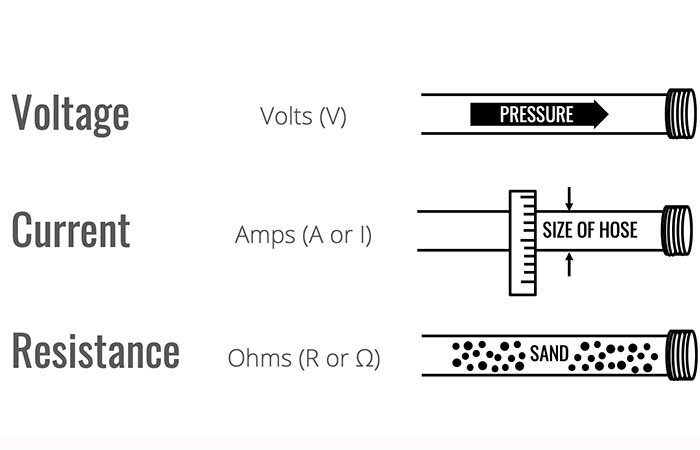
| Water Analogy | Water pressure | Water flow rate | Narrowing of pipe |
| Cause/Effect | Cause | Effect | Controller |
Measuring Instrument
Measuring instruments differ for voltage and current. Additionally, one must understand their connection within the circuit.
For example, a voltmeter measures voltage but must be connected in parallel in the circuit. An ammeter measures current in a circuit but requires a series connection. An ohmmeter measures resistance, provided no current is flowing through the circuit.
Function in Circuit
Current refers to the movement of electrons from the negative terminal to the positive terminal, or vice versa. Voltage is the driving force that ensures current flows through the circuit.
On the other hand, resistance is the opposing force to current. It impedes the flow of electrons between terminals.
Dependency
Voltage is often independent of current or resistance. It is determined by the power source or batteries. Current depends on voltage and resistance. Resistance is constant and remains unchanged regardless of variations in voltage or current.
Behavior in a Series Circuit
Voltage is divided among the components in a series circuit. For example, sum the voltages across all components and divide by the number of components. Current remains constant throughout all components. Meanwhile, the total resistance is the sum of the resistances of all elements.
Behavior in a Parallel Circuit
In a parallel circuit, voltage remains constant across all components, while current is divided among them based on the total number of components, as described above. However, resistance is calculated differently for each branch.
For example, the formula 1/R is used to calculate the equivalent resistance for each component in parallel.
Real-World Analogy
Let us measure and analyze each component in practical applications.
Voltage = Water Pressure. Higher voltage indicates greater pressure to push current through the circuit.
Current = Water Flow Rate. It represents the total amount of current flowing through the circuit.
Resistance = Pipe Size or Obstruction. A narrow or blocked pipe impedes the flow of current.
Cause/Effect Relationship
Voltage is the driving force that creates pressure to push current. Meanwhile, current is the result of this push. On the other hand, resistance acts as a control mechanism that restricts or regulates the current.
Real-World Examples and Applications
Numerous applications in our daily lives involve current and voltage in circuits. Let us examine some of them.
Phone Chargers
A quick and simple example of voltage is phone chargers. Most phone chargers support 5V or higher voltages. However, fast chargers from Xiaomi can operate at 9V or more. Similarly, current typically flows at values such as 2A or 3A.
Resistance is not directly measured, as it is managed internally by the phone's circuitry.
Home Lighting Systems
Home lighting systems maintain the same voltage across all household components. Residential voltage standards worldwide range from 110V to 240V. Current may vary depending on the power rating of the lighting systems. Filaments in home lighting systems control resistance to allow current flow.
Electric Vehicles
Electric vehicles operate at higher voltage levels, reaching up to 800V. However, managing such voltage requires higher current values. The internal system also minimizes resistance to ensure smooth current flow.

FAQs
1. Can voltage exist without current in a circuit?
Yes. Voltage can exist independently of current if the circuit has infinite resistance or is open. Similarly, batteries maintain voltage even when no current is flowing through them.
2. What is the impact of resistance on current?
High resistance obstructs electron flow and reduces current. Therefore, current is higher in low-resistance circuits and lower in high-resistance circuits.
3. Why does a parallel circuit behave differently from a series circuit?
Parallel and series circuits exhibit different structures and behaviors regarding current and voltage. For example, a parallel circuit maintains the same voltage across all components, whereas a series circuit distributes voltage differently across the same components.
 Russia
 English