
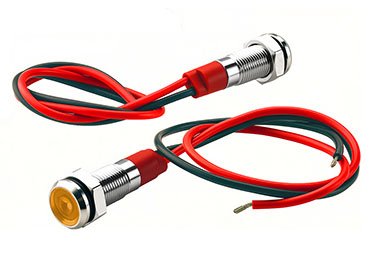
LED indicator lights are signaling transmitters for various equipment and machines. They serve a critical function—to predict failures before it is too late.
Therefore, selecting a low-quality or incompatible LED indicator light can lead to system failures and financial losses. Conversely, the right choice creates a win-win situation through quality options.
We will elaborate on LED indicator lights, explore their types, and provide helpful tips.
What Are LED Indicator Lights?
LED indicator lights indicator lamps are colored lights that display signals. They utilize LED technology and RGB colors to show red, green, or various other colors for indications.
For example, a green light indicates that the system is operating efficiently without errors. A red light signals a failure.
Due to their powerful signaling capabilities, indicator lights are used in machinery, vehicles, and electronic devices.
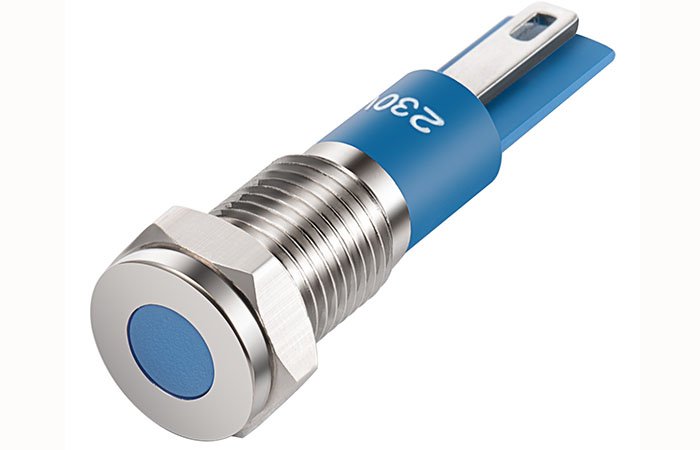
Types of LED Indicator Lights
LED indicator lights can be categorized into four essential types. Let’s explore them.
Wired LED Indicator Light
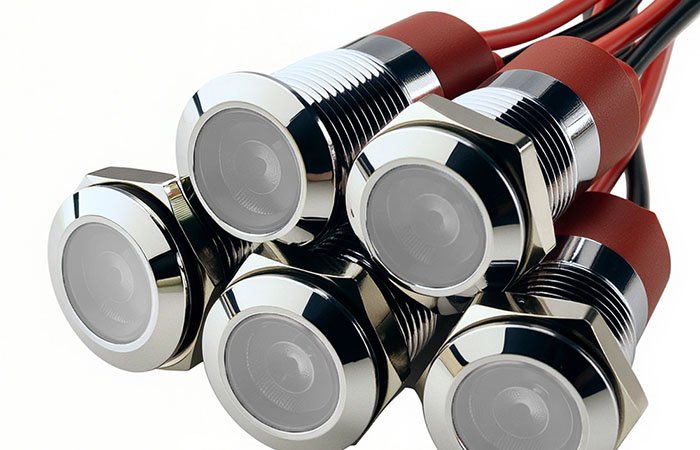
Wired LED lights come with a wired connection, making power source connections easy to handle and maintain. They do not require additional setups and provide a seamless connection.
Pin LED Indicator Light
Pin LED indicator lights feature a metal pin at the bottom instead of wires. These are integrated into circuits to perform their function.
Screw Pin LED Indicator Light
These lights have a threaded design and are screwed into the system to activate illumination. They are commonly used in robust indication systems such as those in vehicles and industrial equipment.
Stitching the LED Indicator Light
Stitching LEDs feature a unique stitching pattern on flexible surfaces or fabrics. They are often used in decorative applications due to their aesthetic appeal, though they offer lower durability.
Key Factors to Consider When Choosing LED Indicator Lights
LED indicator lights are compatible with various systems and offer a range of features. Here is how you can optimize your selection based on available options.
Voltage and Current Ratings
Voltage and current are both critical factors. High voltage can burn out LEDs, while low voltage can cause flickering and dim illumination. The same applies to current, which also requires compatibility.
For instance, if your system operates on 12V, you must purchase a 12V indicator light. Additionally, verify compatibility by consulting the manufacturer’s manual.
Size and Mounting Style
LED indicator lights should be of standard size. Choosing an overly large light can lead to higher costs and power consumption, while a small LED indicator light may be difficult to see.
Similarly, mounting styles can vary, such as panel mount or screw mount. A panel mount requires holes for fixation, while a screw mount uses threading to secure the light in place.
Brightness
Consider where you will deploy your indicator light bulb. For indoor use, low to medium brightness is sufficient. For outdoor applications, bright sunlight can hinder visibility, so opt for high-brightness indicator lights.
Colors
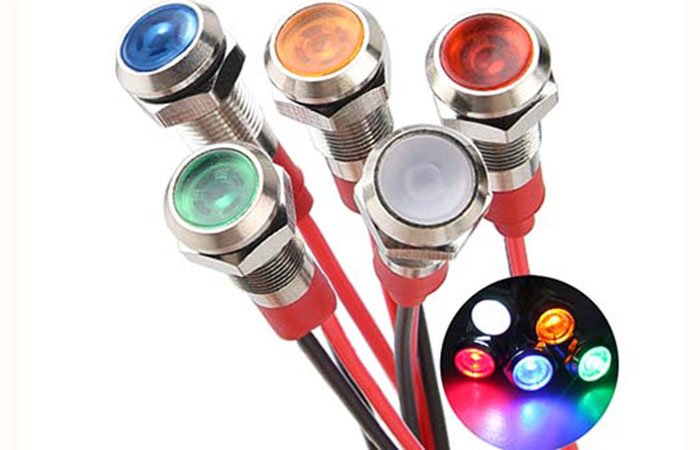
LEDs utilize an RGB color model, enabling them to produce various colors such as red, green, yellow, blue, and white.
You should define the meaning of each color. For example, red typically indicates a warning, green signals normal operation, and yellow may indicate standby mode.
Lifespan
LEDs are renowned for their long lifespan, typically ranging from 20,000 to 50,000 hours. For extended durability, contact reputable suppliers and verify quality before purchase.
Environmental Resistance
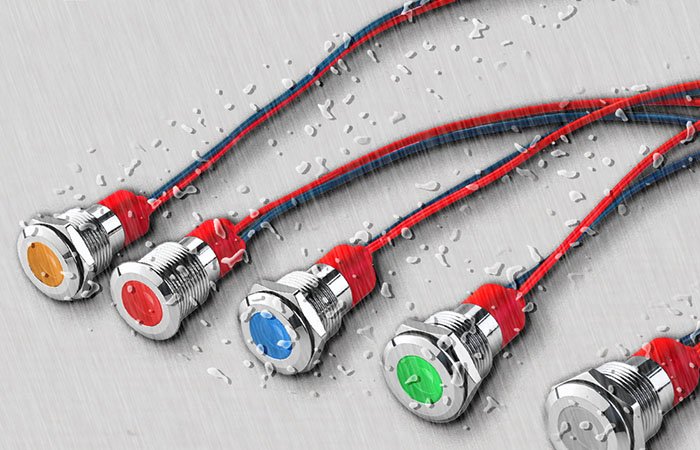
Industrial environments can be harsh and may cause immediate damage to LED indicators. Choose lights with an IP65 rating for dust and splash resistance, or IP67 for waterproofing and protection against rain or brief immersion.
Lens and Viewing Angles
Lens shape and materials can also affect indicator light performance. Clear lenses offer better visibility, while a wider viewing angle is ideal for direct viewing.
Compliance and Certificates
Electrical, electronic, and lighting products should possess the following certifications:.
- CE (European safety standards)
- RoHS (Restriction of Hazardous Substances, environmentally safe)
- UL (Safety certification, standard in the U.S.)
- These certifications ensure safety and guarantee that you are purchasing quality products.
Common Mistakes to Avoid When Choosing LED Indicator Lights
Consumers often make several mistakes when purchasing LED indicator lights, including:
Ignoring Voltage Compatibility
Incorrect voltage and current ratings mean the indicator lights are not suited for the application. They may fail to illuminate or burn out depending on the supplied voltage.
Choosing Incorrect Brightness
Choosing low brightness for outdoor applications is a serious mistake, as visibility will be significantly reduced. Always select the appropriate brightness level.
Overlooking Color-coding Standards
Red typically indicates warnings or critical issues, while green signifies normal operation. Avoid mixing these up or selecting the wrong indicator lights.
Neglecting Mounting Size
If you have a panel mount structure, ensure the correct hole size. Similarly, flush-mounted indicator lights require a flat surface for installation.
Not Considering the Environment.
Environmental conditions are among the most critical factors. Prioritize these considerations and verify compliance with relevant standards and certifications.
FAQs
1. How much voltage is required to turn on indicator lights?
Indicator lights typically operate on low-voltage systems, such as 3V, 5V, 12V, or 24V. Before purchasing an LED light, ensure voltage compatibility to prevent issues.
2. What causes abnormal flickering or color changes in LED indicators?
This is often due to power source issues, such as weak connections or system incompatibility. Address loose wiring or replace the LED with a compatible solution.
3. Can LED indicator lights be used outdoors?
Yes, they are durable, but always verify the IP rating for dust and waterproofing before installation. Only use them outdoors if the IP rating confirms suitability.
4. What is the standard hole size for panel-mount LEDs?
Standard hole size varies from one LED to another mounting system. Usually, 8mm, 12mm, 16mm, and 22mm are the standard hole sizes for panel mount LEDs.
 Russia
 English