
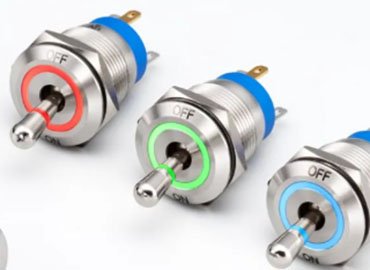
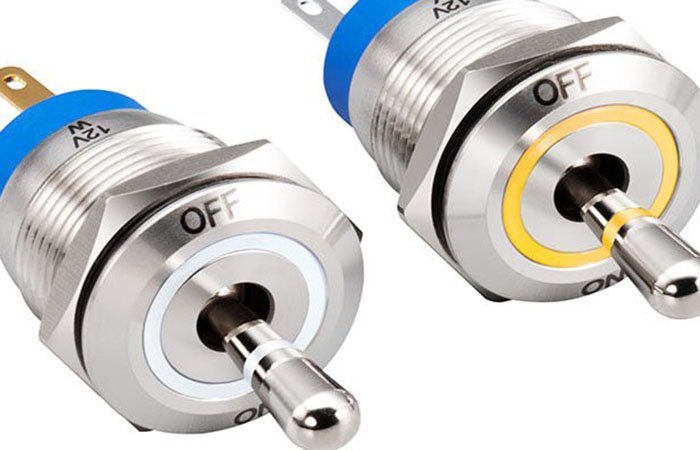
Electrical switches come in different types and configurations with their unique setup. One of the basic and simple switches is the toggle switch, which brings straightforward on-and-off functionality.
With the correct setup and wiring, you can establish proper connections and operate the switch. Today, we will learn about toggle switches and their configurations, along with their straightforward setup.
Let's explore the wiring steps.
What is a Toggle Switch? How Does It Work?
A toggle switch It features a straightforward on/off mechanism. It can either activate the switch to allow electrical flow or deactivate it to cut off the supply. Due to its plug-and-play functionality, such a switch is highly effective in automotive, electronic, appliance, and lighting systems.
Types of Toggle Switches
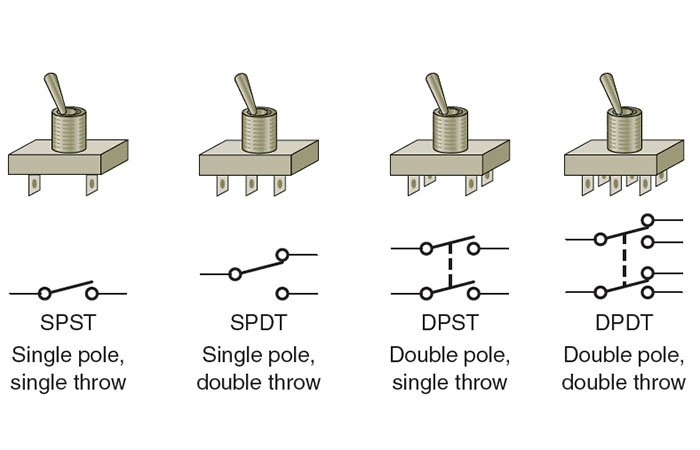
There are typically four configurations of the toggle switch.
Single-pole single-throw (SPST)
A single-pole, single-throw switch is a simple on/off toggle switch. It controls a single circuit with one current path, turning the system on or off when toggled.
Single-pole double-throw (SPDT)
Consider it similar to a selector switch. It offers added functionality with a three-terminal system featuring on, off, and on positions. A standard input system has two outputs connected to the load for turning it on and off.
Double-pole single-throw (DPST)
A double-pole, single-throw switch is a crucial configuration for controlling two circuits or lights with a single switch. It functions like two SPST switches combined, featuring four terminals: two inputs and two outputs. Flipping the switch can simultaneously activate or deactivate two different devices.
Double-pole double-throw (DPDT)
A double-pole, double-throw switch combines the features of two single-pole, double-throw switches. With six terminals, it includes two inputs and four outputs for the two internal switches. It controls two circuits, with each switch having two output options.
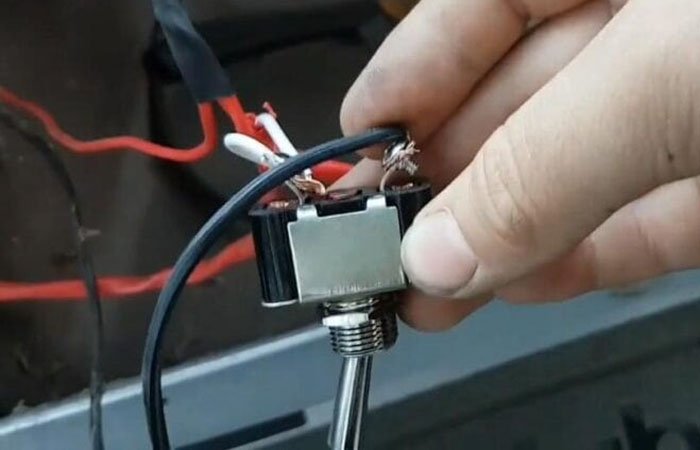
Tools and Materials Required to Wire a Toggle Switch
The following is a list of tools and necessary materials required to complete the wiring task:
- Toggle switch
- Wire strippers
- Screwdriver
- Electrical tape
- Wires
- Wire connectors
Step-by-step Guide to Wire a Toggle Switch
If you have gathered all the necessary tools, follow these steps to wire a toggle switch.
Step 1: Identify Switch Terminals
How many terminals does your switch have? There are typically two common designs.
A two-terminal switch is a basic system with simple on/off functionality. A three-terminal switch, on the other hand, provides on-off-on functionality.
Step 2: Prepare Wires
Identify the wire ends and remove approximately ½ inch of insulation using wire strippers. This is usually sufficient to create effective connections.
Step 3: Connect Wires
The type of configuration you use is very important. For example, a two-terminal switch offers basic functionality, meaning you can connect the positive wire to one terminal and the negative to the other. Typically, it does not matter which terminal is positive or negative in this case.
In a three-terminal switch, the middle terminal is usually the common input, while an outer terminal connects to the load you wish to control. The third terminal should be connected to maintain the on-off-on functionality of the switch.
Step 4: Secure Connections
After connecting the terminals, inspect all connections. Identify any loose connections and tighten them to ensure they are secure. A screwdriver can be used for this purpose.
Step 5: Insulate Connections
Use electrical tape to thoroughly wrap all exposed connections and metal parts.
Step 6: Mount and Test the Switch
You may have an electrical box to mount the switch. Regardless of the desired location, install the switch, restore power, and test the connections. Conduct a thorough check for any errors or short circuits.
Safety Precautions to Avoid Accidents with Toggle Switches
Accidents can occur during toggle switch installation. Adhere to the following safety codes and precautions:
Power Off
Never work on wiring with the power on. This poses risks of fire and personal injury due to live current. Unplug the device, disconnect the battery, or turn off the main circuit breaker to prevent electric shock.
Use Insulated Tools
One of the primary causes of electrical shock is the use of non-insulated tools, which can conduct electricity and cause burns. Therefore, always use insulated tools and also wrap electrical tape around exposed joints and wires.
Comply with Local Electrical Codes
Every region has specific electrical codes designed to ensure the safety of electrical work. It is essential to review these electrical codes, understand the precautions, and follow them diligently.
FAQs
1. Does it matter which wire goes where on a toggle switch?
It primarily depends on the configuration. For example, a two-terminal configuration typically does not require identifying positive or negative terminals. However, in a three-terminal configuration, the middle terminal is usually the common input, while the two outer terminals are outputs.
2. How do you identify positive and negative terminals on a toggle switch?
Due to their straightforward functionality, most switches do not have designated positive or negative terminals. Depending on the switch type, terminals may be labeled as common or load.
3. What happens if we connect the wrong terminals on a toggle switch?
The toggle switch will not function correctly. If it does operate, incorrect connections may lead to short circuits and electrical accidents.
4. Is it essential to ground a toggle switch?
Grounding a toggle switch is not always a mandatory requirement. However, for installations in residential settings, grounding may be necessary to enhance safety.
Conclusion
Wiring a toggle switch does not require in-depth knowledge; a basic understanding is sufficient. Always double-check connections and test functionality to verify proper operation. Ensure all cables are effectively insulated and secured.
 Russia
 English