
When picking a switch, you can’t afford to guess. Every switch in your system controls something critical. Whether it’s a motor, relay, or signal path, the choice plays a vital role.
In industrial setups, the wrong switch leads to downtime. You’ll deal with system faults, overheating, and electrical damage. These failures cost you more than just repair work.
Industrial losses from switch failures aren’t rare today. Studies show equipment failures cause 42% of plant downtime. That’s why choosing the right switch is a strategic move. This guide will walk you through effective steps to consider before choosing the right switch for your project.
What Is a Switch and Why Does It Matter?
You usually use a switch to start or stop electricity. It either allows current to pass or blocks it. Every machine, panel, or tool depends on that control. Without a switch, your system loses its command center. That makes switches essential for safe and timed operations.
A switch does not merely transfer current. It manages the system’s workflow. It determines the start or end of your process. You would lose your target when a switch slows down. The downstream systems and output can be delayed.
When the incorrect switch breaks, your activities come to a halt in a second. You waste time, affecting the efficiency of your system. A minor malfunction can stop a whole manufacturing process.
Types of Switches and Where They Work Best
Different switch serves different industrial needs and functions. You can’t use one type across every application. Each switch style fits specific operational conditions and actions. Choosing the wrong one leads to risk and inefficiency.
Toggle Switches
Toggle switches provide a direct mechanical control effect. You can use these switches to enable or disable the current. They operate in dusty and rugged industrial places.
Push Button Switches
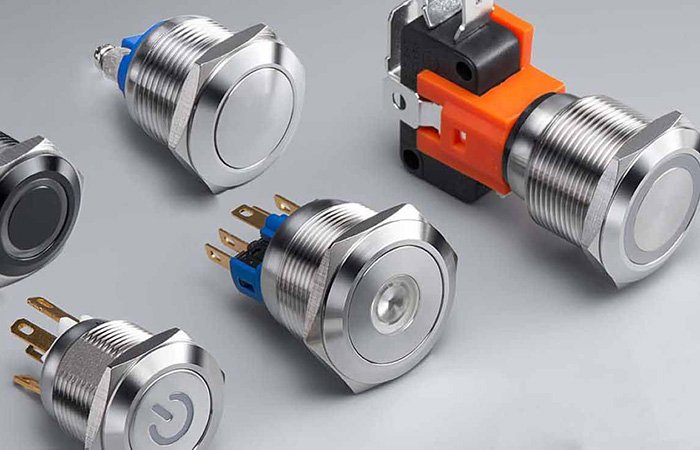
Push button switches are applicable for short-term activation. When you press, they are swiftly back on track. They are appropriate to start up, stop, and reset controls. Select switch button push to receive quick and safe repetitions of the machine.
Rotary Switches
Using rotary switches, you set a knob to choose a function. They find application in HVAC and multi-speed drives.
Rocker Switches
Rocker switches have easy on/off control. One side is pressed, and the state is reset. They suit small panels and light machinery. When you have limited space and need a quick response, rockers are the go-to choice.
Key Factors to Consider Before Choosing a Switch
You need to match the switch to the actual demand. Ignoring key factors will lessen your switch life and performance.
Switch Function
You have to specify exactly the switch will turn. Is it going to start and stop, or alternate modes? The type and the wiring requirements are decided by the function. Select a switch that is to your system’s purpose.
Power Load
Overheating or failure occurs when the limit of load limit is exceeded. Never assume load rating when it comes to checking your equipment specs. Load the match by a 20-30 per cent margin of safety.
Press Frequency
High-cycle and long-lasting construction is required due to frequent use. The usual switches wear out in frequent-use conditions more quickly. Select one that has a long mechanical life.
Safety Standards
You have to adhere to local, as well as international, electrical standards. Find UL, CE, or IEC labeling every time. Certified switches limit fire and shock immediately. In industrial systems, non-certified parts should never be installed.

Step-by-Step Switch Selection Process
Choosing the right switch demands more than quick guesses. A detailed approach validates long-term safety and system performance. Follow these steps to build reliability from day one.
Step 1: Define the Switch’s Core Operating Function
First, you have to identify the switch to which you have defined control. Is it motor starting, shift logic,c, or safety? This is whatchoosesf the switch type. Whenever considering the task, always conceptualize the appropriate functional implementation afterwards.
Step 2: Calculate the Real Power Load Conditions
The measurements of voltage and current should be made on actual machine data. Never assume anything. Just make decisions according to the spike in loads. The switch will get overheated or damaged when limits are exceeded. As a protection against any possible overload, there should be a margin of 25% to be applied always.
Step 3: Consider the Surrounding Environment Exposure
You have to check the temperature, moisture, and dust. Sealed or rugged, IP switches are required in harsh zones. Environmental match prolongs the life of services and reduces the number of breakdowns.
Step 4: Check Compliance with Industry Safety Standards
Make sure that all the switches are UL, CE, or IEC certified. Switches that are not in compliance raise fire, shock, and liability risks. Datasheets and certification should be requested at all times before procurement.
Step 5: Validate Serviceability and Replacement Access
Can your team replace the switch without disassembling the systems? If not, expect long maintenance delays during breakdowns. Choose front-access or tool-free options when possible. Design decisions must simplify on-site service work.
Step 6: Simulate Application Behavior Before Final Approval
Install test units in a real-time operating environment. Monitor behavior under full load and cycle conditions. Look for heat, lag, wear, or delayed feedback. Field testing finalizes your switch selection with confidence.
Summary
Choosing the right switch is not just technical. You must match the switch to load, function, and environment. A wrong choice can lead to delays, failures, and accidents. You protect systems when you follow structured selection steps. The right switch keeps your operation running smoothly daily.
FAQ’s
Q1: How do I know which switch type to choose?
You must define the switch’s function and its usage first. Choose a switch based on control needs, layout, and frequency.
Q2: What happens if I exceed the switch’s load rating?
Overloading causes overheating, contact damage, and early failure. Always match your switch to real load conditions with a margin.
Q3: Do environmental conditions affect switch performance?
Yes, dust, heat, and moisture reduce switch lifespan. So, use sealed or rated switches in harsh environments to avoid issues.
Q4: Why is certification important for industrial switches?
Certified switches follow safety rules and quality benchmarks. Always look for UL, CE, or IEC approval before installation.
 Russia
 English