
Introduction
Switches are the backbone of the modern circuit and electronic infrastructure. Touch-based switches have replaced mechanical switches because of their advanced functionality and superior technology.
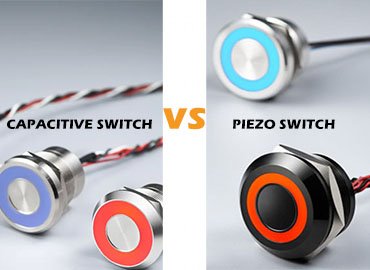
But two types of touch based switches are already reigning in the industry due to innovative tech. Capacitive and piezoelectric switches feature different materials and technologies. Let’s know their crucial differences and understand how they work.
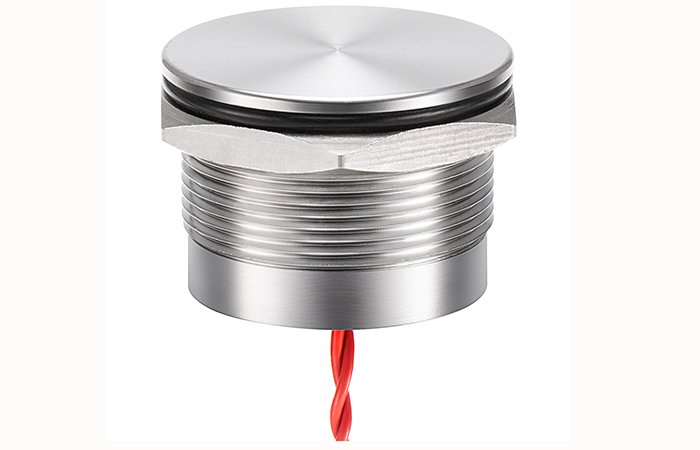
What Is The Piezo Switch?
A piezoelectric switch deploys the stress detection mechanism to turn on or off the switch. Whenever the mechanical stress is applied to the switch, it responds to the command.
The working mechanism depends on the piezoelectric crystal. Pressure or mechanical stress in the form of finger touch deforms the crystals and produces a charge. This charge is processed as an on/off function of the switch.
What Is The Capacitive Switch?
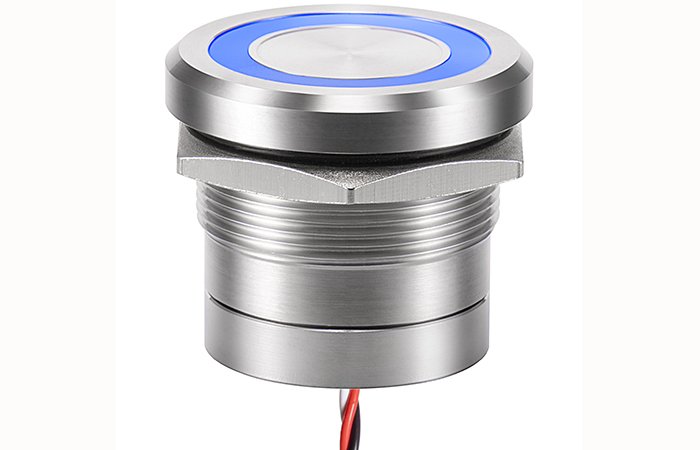
A capacitive switch is like an electrical circuit. It responds to the changes in capacitance when an object or finger is brought closer to the circuit.
The working mechanism relies on the capacitance plate. When you move a finger near it, a change in the electrical field occurs. This change defines whether to turn on or off the circuit.
Differences between The Piezo and Capacitive Switches
Piezo and capacitive switches have one single goal but different features and specifications. Here is the head-to-head comparison of both switch types.
| Feature | Piezoelectric Switch | Capacitive Switch |
| Activation Method | Requires pressure/force | Detects touch or proximity |
| Power Requirement | Works without constant power | Needs continuous power |
| Environmental Resistance | Excellent (water, dust, chemicals) | Sensitive to moisture and dirt |
| Design & Aesthetics | Rugged, industrial look | Sleek, modern touch interface |
| Cost & Complexity | Higher cost, more complex | Lower cost, easier to implement |
| Durability | Extremely durable, no moving parts | Less durable, surface wear possible |
| Typical Applications | Industrial, medical, outdoor equipment | Consumer electronics, touch panels |
Activation method
Piezoelectric switches require mechanical stress or pressure. You can apply this pressure with metal, glass, or gloves.
On the other hand, capacitive switches are all about the change in the electrical field. That is possible only by the bare finger or proximity. Even an insulated surface can’t work in this case.
Power requirements
Piezoelectric switches generate their electrical field. There is no constant power requirement to operate such switches. You need physical stress.
On the other hand, capacitive switches require a constant power supply to detect the changes in capacitance upon the finger touch.
Environmental resistance
Piezoelectric switches are robust and built to withstand all harsh environmental conditions. They are fully sealed, waterproof, and resistant to chemicals, dust, and extreme temperatures.
Compared to it, capacitive switches are not that durable. They are sensitive to environmental interference, especially moisture, humidity, and dirt. Therefore, an environmental change can cause touch issues. For example, the high humidity or wet environment causes a significant problem for the capacitive switches.
Design and aesthetics
Piezoelectric switches are designed to fight the environmental odds. They have a metallic construction and don’t vanish easily. These switches can contain brushed stainless steel finishes to make them sleek and attractive.
Capacitive switches hold a stunning aesthetic and seamless design. You can use glass, acrylic, or plastic panels to use them in front of such switches. Overall, they give a more beautiful touch rather than a robust construction.
Cost and complexity
Piezo switches are expensive due to piezoelectric materials and integrated systems. Their deployment is also complex. Therefore, you might need expert services for their integration.
In contrast, capacitive switches are affordable and faster to produce. They are seamless to integrate and don’t need expert services for installations in the system.
Durability
Construction defines durability. Piezoelectric switches have a durable material and are 100% immune to mechanical stresses. They don’t have moving parts and can undergo stress applications in harsh environments.
On the contrary, capacitive switches are less durable and challenging to manage. Their touch sensitivity is higher, and they can catch dirt or cleaning agents quickly.
Applications
Applications vary from one to another.
Piezoelectric switches are designed for a robust environment and harsh conditions. They are used in:
- Industrial automation
- Medical instruments
- Military panels
- Outdoor public access controls
- Marine navigation systems
- Food-grade environments
Capacitive switches are ideal for touch-sensitive applications, such as:
- Consumer electronics
- Microwaves
- Washing machines
- Vending machines
- Touch-sensitive lamps
FAQs
1. Is it necessary to establish physical contact for a Piezo switch?
Yes, 100%. You need physical contact to operate a Piezo switch, as it depends on the mechanical stress. Your finger pressure can make its operations feasible.
2. Does a piezo switch work without an external power source?
The answer is partially yes. The Piezo switch doesn’t require an external power source for input detection. Sometimes, you need power for the output. However, it doesn’t require continuous power like the capacitive switches.
3. Can a capacitive switch work through gloves?
Not always. Capacitive switches require finger touch and electrical field changes for the on/off response. An insulated glove can’t provide significant changes in the electrical field. So, it is challenging to work through gloves.
4. Can I use capacitive switches in place of a piezo switch?
It depends on the environment. If you are deploying the capacitive switches in a dry climate, it works. In a wet environment, capacitive switches are less reliable and can’t perform as expected.
 Russia
 English