
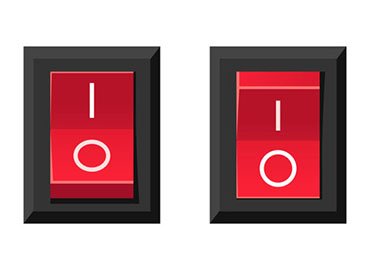
Switches are the basic control of every machine or device. They generally come with two options. Either they can be on if the circuit is closed or off if the circuit is open. But the circuit closure or opening relationship with the switch on/off varies.
There are several symbols based on the different types of switches. Today, we will discuss the significance of the switch symbols and understand the differences among various types.
What Do Symbols of On/Off Switches Represent?
Switch symbols are straightforward indications of the current status of the circuit. For example, a circuit has two connected terminals and is closed.
In closed circuits, current can flow. The status ON indicates the complete circuit and flow of the current. Such indications are crucial in the industrial and household settings.
Origin of On/Off Switch Symbols
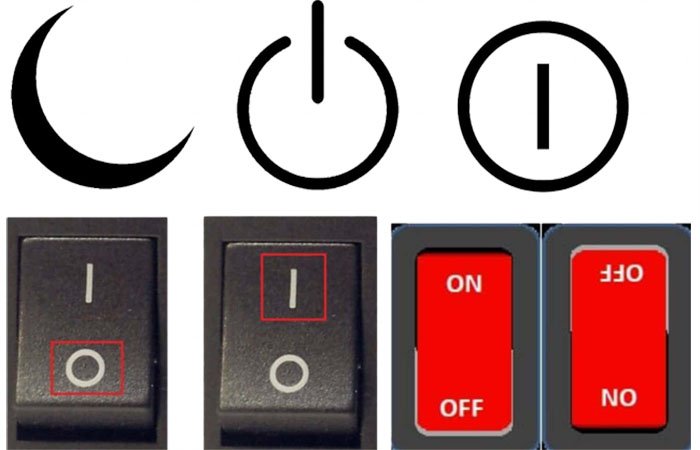
The origin of the on/off symbols relates to the authorities that originally introduced this system to depict the current status of a circuit.
The International Electrotechnical Commission (IEC) and the Institute of Electrical and Electronics Engineers (IEEE) are the two most influential authorities that introduced the switch symbols.
The evolution occurred from the binary digits, which means 0 is the off or open state, while 1 is the closed or on state of the circuit.
Other local and international authorities, such as ANSI (American National Standards Institute) and ISO (International Organization for Standardization), have devised the symbols to make them universal and understood all around the globe.
Types of Electrical Switch Symbols
There are a few examples of electrical switch symbols, from simple to advanced ones.
Mechanical Switch Symbols
Mechanical Switches are straightforward switches used in the home and commercial sectors. They often work by pressing the buttons or through physical contact, through pressure exertion.
Typical examples of such switches with their symbols are:
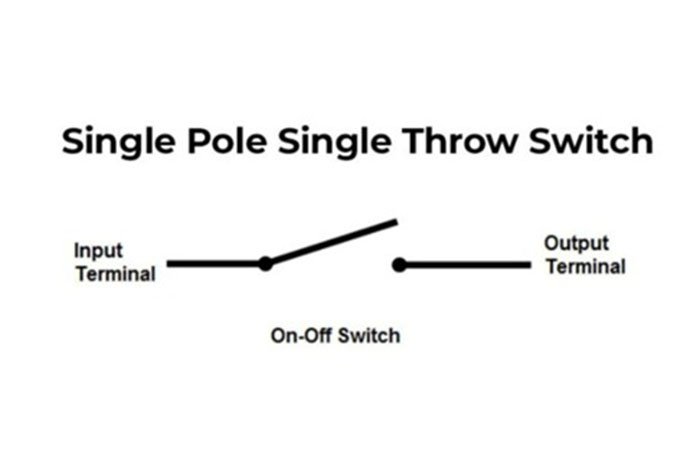
A single-pole and single-throw switch allows current in the ON or closed position and stops it in the OFF position.
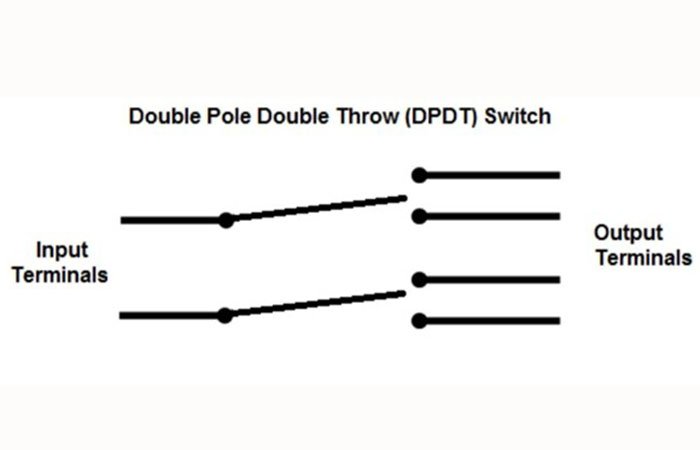
Double pole and double throw switch operate two circuits, allowing the same configuration for the on and off system.
Special-purpose Switch Symbols
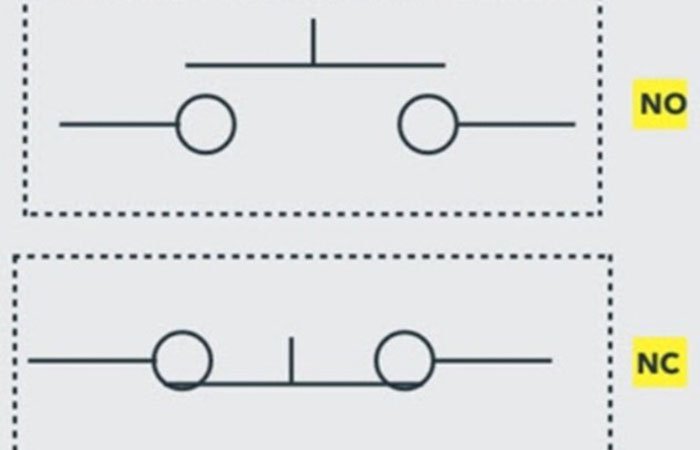
Special-purpose switches have a specific function and are often part of a control system. A typical example is the push-button switch. It is usually open and requires pressing the switch to close the circuit and let the current flow through it.
Electronic Switch Symbols
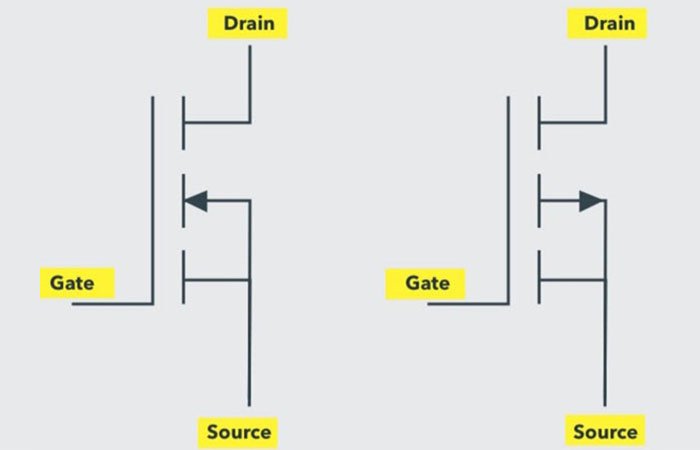
Unlike mechanical switches, electronic switches have a semiconductor system for controlling the switch. They come with different configurations.
For example, MOSFETs (Metal oxide semiconductor field effect transistors) are standard in building advanced circuits. They come with special symbols to indicate the on and off positions.
Advanced Switch Symbols
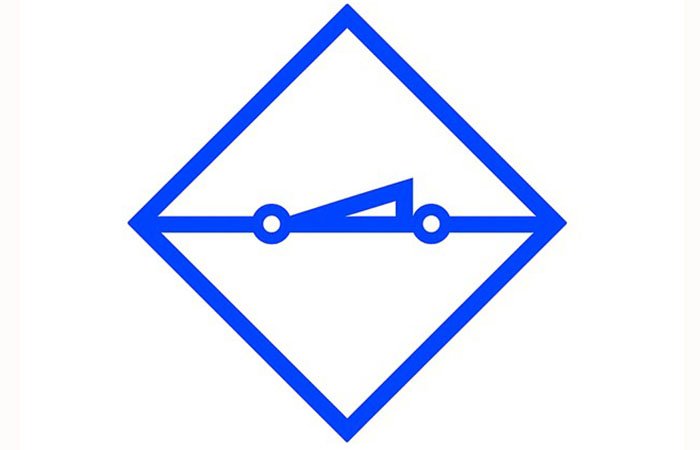
Advanced switches have different functionalities and on/off systems. For example, a proximity switch can detect objects within its range and operate efficiently.
Significance of On/Off Switch Symbols
Electrical Switch Symbols are crucial in various areas. From simple depiction to critical applications, they play the following roles.
Ensure Clarity
Symbols depict the status of the circuit and help the designer, technicians, and engineers to look at them and understand the status. This consistency of symbols prevents errors when different specialities work on a single system.
Identify Control Mechanisms
Some circuits have a default closed position. At the same time, others have an open position. Symbols can represent whether the circuit is closed in the normal position or off. It makes control better and more defined while reducing the chances of errors.
Make Circuit Design Easier.
Designers mainly depend on the circuit designs to understand and design a new circuit. It saves time and reduces the chances of errors while making a circuit design.
Prevent Accidents in Installation and Repair.
A lack of acknowledgement of symbols can lead to a mishap when troubleshooting. However, IEC symbols can help prevent accidents when the experts know the correct symbols.
Ensure Compliance
Most industrial sectors are expected to comply with the ISO, IEC, and IEEE, depending on the regional systems. Showing the switch symbols following these standards can make it easy for you.
Applications of Electrical Switch Symbols
Electrical Switches have applications in diverse areas. Here is an overview of a few applications.
Industrial Control System
In industrial setups and automation systems, switch symbols are crucial in designating the on/off position and emergency conditions. Technicians and operators can understand these universal symbols and maintain the system effectively.
Home Appliances
In home appliances, there is no need for the advanced symbols and switches. Therefore, simple on/off symbols for a washing machine switch are sufficient for daily chores.
Automotive
The automotive industry has a few complex wiring and control systems. Advanced switch types indicate the current status of the control system for efficient operations.
Power Electronics
Switch symbols, such as amplifiers, inverters, and converters, are essential in power electronics. They help understand the current flow through the system.
PCB Design
When designing a circuit, these switch symbols can indicate the switch type used in a schematic diagram. It can work efficiently.

FAQs
1. Who defines and standardizes electrical switch symbols?
Different authorities are working on the switch symbols. The primary responsibility is of the International Electrotechnical Commission (IEC). The Institute of Electrical and Electronics Engineers (IEEE) and the American National Standards Institute (ANSI) have also made the symbols universal.
2. Are electrical switch symbols universal?
We can say yes to some extent when the authority is the International Electrotechnical Commission (IEC). However, the regional and industrial differences can still occur. Moreover, ANSI and IEEE have introduced almost universal symbols.
3. Is there any difference in the switch symbols of IEC and IEEE?
Yes. Style and graphical differences exist between the switch symbols of IEC and IEEE. For example, a push button switch symbol in IEC is a simple line intersecting a circle, while IEEE has added extra details to show motion.
4. How can switch symbols help troubleshoot electrical circuits?
Switch Symbols give the status of the circuit, making it safer to operate. For example, electricians will be more careful during troubleshooting when the position is on.
Conclusion
Each switch has its definitive symbol that is different from the other. For example, a push-button switch has a different symbol than a more advanced switch type. You must understand and follow the IEC, IEEE, and ANSI standards.
 Russia
 English